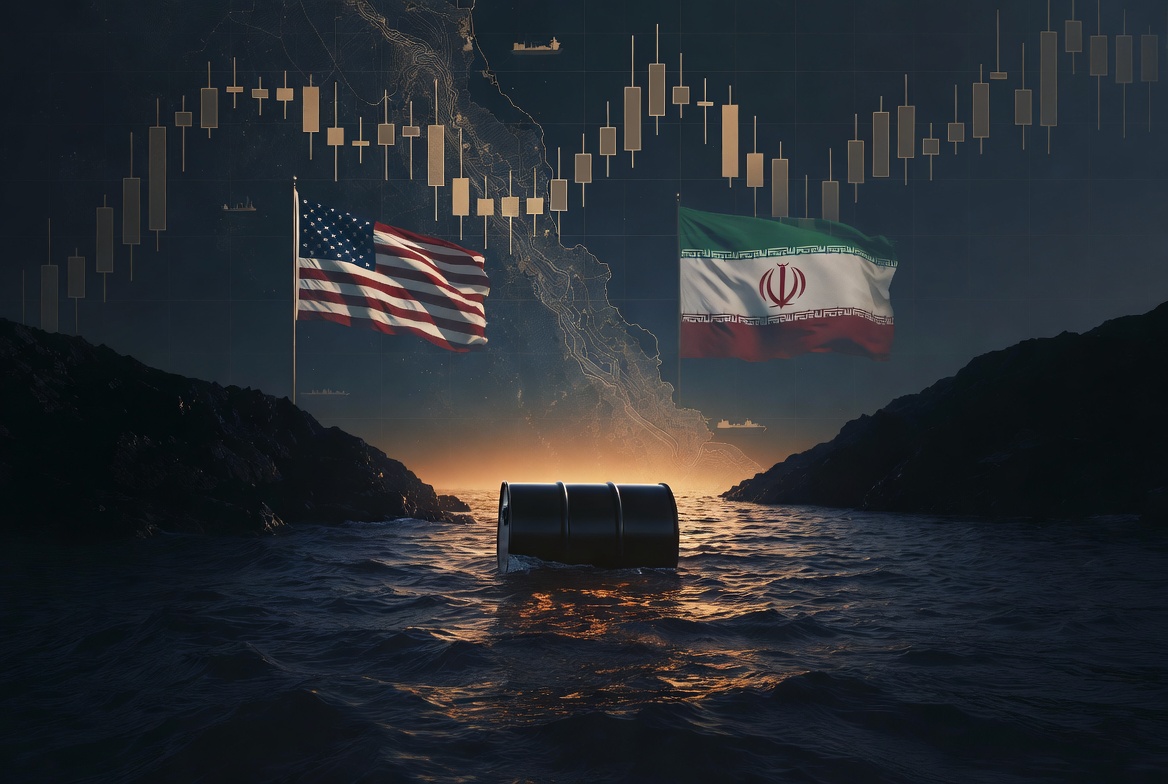
US Iran Deadline Incoming: Trader Playbook for Oil, Gold, Dollar and Stocks
Open Vantage →
The desk’s three-broker stack
Pick the broker that matches your priority. Vantage for Tier-1 regulation plus Lloyd’s $1m insurance. E8 Markets for funded trader capital with code KENMACRO at checkout.
Capital at risk. CFD and margin trading carry significant risk of loss. Past performance does not guarantee future results.
Pick the broker that matches your priority. Vantage for Tier-1 regulation plus Lloyd's $1m insurance. E8 Markets for funded trader capital with code KENMACRO at checkout.
Macro Insights · KenMacro · Live Market Brief · By Ken Chigbo
Macro trader and educator. Founder, KenMacro. 18+ years in markets, former London trading floor and institutional FX analyst.
In one sentence
JD Vance is reportedly flying to Islamabad for eleventh-hour talks with Iran ahead of Trump’s ceasefire expiry Wednesday evening ET , and every major asset class is sitting on the outcome.
This is a live macro brief covering the Iran deadline today. We cover what is happening, why Pakistan matters, how oil, gold, the dollar, bonds and equities have reacted so far, and the four scenarios traders need priced in before the deadline.
What traders should watch right now
| ☐ Brent crude , is it holding above or losing $95? |
| ☐ AUD/JPY direction , the fastest risk sentiment tell on the board |
| ☐ DXY reaction , safe-haven flows vs yield advantage |
| ☐ Gold vs US 10-year real yields , which force is dominant |
| ☐ Any official Iran confirmation of attendance at Islamabad talks |
| ☐ Any Strait of Hormuz shipping update or blockade change |
Evergreen reading to pair with this brief
How Geopolitics Moves Forex Markets → ·
How Inflation Affects Forex, Gold and Stocks → ·
What Actually Moves the Forex Market →
“This is not a headline trade. This is a scenario trade. Traders who have their playbook built before the deadline hits are the ones best positioned on either outcome.”
, KenMacro
30-second summary
| Event | Trump’s US-Iran ceasefire reportedly expires Wednesday evening ET |
| US delegation | Vance leading, Witkoff and Kushner reportedly involved (Axios, CNN) |
| Iran position | Not confirmed attendance. Citing US ship seizure and Hormuz blockade as ceasefire breaches (Al Jazeera) |
| Hormuz status | Reports suggest tanker flows have slowed sharply , among the largest disruptions in recent decades (CNBC, LSEG data) |
| Brent crude | Mid-$90s area. Spiked ~7% Monday, easing into Tuesday on talks hopes |
| Gold | One-week low area as dollar firms and yields rise |
| Dollar (DXY) | Hit one-week high on safe-haven demand before fading |
| Trump line | “Highly unlikely” to extend deadline. Warned of “problems like they’ve never seen” (CNN) |
US Iran News Today: What Is Happening Right Now
The desk's free macro framework
Same lens this article uses, applied across every asset class. Five questions the desk runs before sizing any trade, plus the four lenses we read price through. No email needed to read the page.
The US-Iran ceasefire , the fragile truce holding since early April , is reportedly set to expire Wednesday evening Eastern Time, according to CNN and Axios. Trump pushed the original deadline back once already. He has now said it is “highly unlikely” he will extend it again without a deal.
According to reporting from Axios and CNN, Vice President JD Vance is leading a US delegation to Islamabad for a second round of talks with Iran, reportedly alongside Special Envoy Steve Witkoff and Jared Kushner. The delegation was said to be departing Washington Tuesday. Talks are scheduled for Wednesday , the same day the ceasefire expires. The timing is deliberate and the margin is razor-thin.
Iran has not publicly confirmed participation. Al Jazeera reported that Foreign Ministry spokesman Esmaeil Baghaei said on Monday that Washington had violated the ceasefire “from the beginning,” citing the US naval blockade of the Strait of Hormuz since mid-April and the overnight capture of an Iranian container ship as breaches. Parliament Speaker and chief negotiator Mohammad Ghalibaf was quoted saying Iran does “not accept negotiations under the shadow of threats.”
Trump, per CNN, responded in kind: “They’re going to negotiate, and if they don’t, they’re going to see problems like they’ve never seen before.” The public rhetoric is as heated as the private diplomacy is urgent. Both can be true at the same time , and markets have to price both outcomes simultaneously.
Why JD Vance Going to Pakistan Matters
Three reasons, and all three matter for positioning.
Seniority is the signal. Sending the Vice President is a step up from Witkoff and Kushner alone. It tells Tehran this round has presidential backing and it tells markets the White House is serious enough to put its second-highest-ranking official on a plane to Islamabad with hours to spare. Diplomatic seniority is a form of pricing information in itself.
Pakistan is the only viable venue. Islamabad has reportedly been in intensive shuttle diplomacy between Washington and Tehran. Neither side will fly to the other. Pakistan is neutral enough for Iran, strategically aligned enough for the US, and physically close to both. The fact that Vance is willing to travel to Islamabad , rather than demand Iran come to him , is itself a concession, which carries meaning in this kind of negotiation.
The deadline is doing the work. Every hour closer to the expiry raises the cost of failure for both sides. Iran faces renewed kinetic action. The US faces an energy shock that would stress the global economy and Trump’s domestic politics simultaneously. This is the kind of forced endgame that either produces a breakthrough or a rapid escalation. There is very little space in between.
Get the framework the desk runs every morning. Free. No card. The same institutional structure the MACRO MASTERY desk uses on every read.
Why Markets Care: How Markets React to War and Supply Shocks
Because this one event reprices every asset class on the same trade. The Strait of Hormuz carries roughly a fifth of global seaborne oil. Reports suggest tanker traffic has slowed sharply. Rystad Energy has flagged that sustained $100 Brent could unlock up to 2.1 million barrels per day of new South American supply , but that arrives on a lag, not overnight. Every day the disruption continues is a day of supply destruction feeding directly into inflation expectations. This is the core mechanism behind Strait of Hormuz oil impact on global markets.
That inflation impulse is colliding with a central bank cycle that was finally starting to ease. Hot oil-driven inflation does not respond to rate cuts , it forces central banks to pause or reverse. The rate path that was priced three weeks ago is not the rate path priced today, and it is not the rate path that would be priced if the ceasefire breaks. That repricing runs directly through interest rate differentials and into every major currency pair.
This is the classic geopolitical transmission chain: supply shock → inflation expectations → rate path → real yields → dollar → gold → equities. Every link moves on the same headline. Traders who understand the full chain see the repricing coming before price confirms it.
If this article helped you understand the move, the full KenMacro Framework shows you how to read these rotations before they happen , daily, across every market.
Get the Free Framework →
|
Explore the Macro Trading Blueprint →
Oil Price Today Iran Risk: Cross-Asset Market Reaction So Far
The repricing has been happening in stages. Every headline in the past week has triggered a fresh rotation. Here is where each asset class sits as the delegation flies.
Cross-asset positioning heading into the deadline
| Asset | Current tone and context |
| Brent | Mid-$90s. Spiked ~7% Monday on ship seizure news, easing Tuesday on talks hopes. Risk premium intact. |
| WTI | High-$80s. Same setup as Brent. Both carrying a sizeable Hormuz premium. |
| Gold | One-week low area. Firmer dollar and rising yields offsetting safe-haven demand. Gold price Iran tensions are being dampened by the rate-expectations channel. |
| DXY | Hit one-week high on ship seizure. Dollar safe haven today bid is priced in, not maxed out. |
| US 10Y yield | Grinding higher on inflation risk. Rate cut expectations being pushed back. |
| S&P 500 | Cautious. Energy outperforming. Growth and tech under pressure from yield move. |
| Nasdaq | Most exposed to a risk-off break. Duration-sensitive on any sustained yield spike. |
| AUD/JPY | The cleanest risk sentiment tell. Soft tone already suggests capital hedging the break scenario. |
Oil
Brent sits in the mid-$90s with WTI in the high-$80s after Monday’s sharp spike. Reports suggest Hormuz disruption has already done structural damage, with LSEG data cited by CNBC pointing to near-standstill tanker traffic during the most acute periods. Even a clean deal does not bring barrels back overnight. That asymmetry matters. The downside on a deal is capped by how long it takes supply to normalise. The upside on a break is uncapped.
Gold
Gold is actually softer despite the tension , a classic case of the real yield mechanism dominating the headline. Rising nominal yields on inflation risk have pushed real yields higher, which is a headwind. Gold is not trading the war , it is trading the rate path the war is forcing. A break scenario that triggers a pure risk-off flight, however, reverses that instantly. The full mechanism is covered in how inflation affects forex, gold and stocks.
Dollar
DXY touched a one-week high on the ship seizure before fading. The safe-haven bid is in, but not extreme. The dollar has two drivers here working in the same direction: yield advantage (rising real yields) and liquidity demand (risk-off flows). Both reinforce in a break. Both unwind on a deal.
Equities
Cautious tone. Energy sector leading, growth lagging. The S&P is holding for now but the Nasdaq is the most exposed name on the board , long duration, valuation-sensitive, and carrying the largest discount-rate risk if yields keep climbing. European indices are more exposed to a pure oil shock given energy dependency. The broader risk sentiment regime is what ties all of this together.
Bonds
The curve is the most interesting instrument right now. Yields are rising on inflation fears but a genuine risk-off break would trigger a flight to Treasuries , falling yields on growth fear rather than inflation fear. Which mechanism wins depends entirely on which scenario plays out.
ASIC regulated. Raw-spread ECN execution. Built for active intraday forex and index traders who care about cost per round-turn.
Four Scenarios , And What Each Means for Every Market
This is the table that matters. Build the playbook before the deadline, not during the headline.
Four scenarios , cross-asset reaction map
| Scenario | Oil | Gold | Dollar | Equities | Bonds |
| Deal reached | Sharp drop | Sells off | Weakens | Rallies hard | Yields fall |
| Talks extended | Range-bound | Consolidates | Mild fade | Drift higher | Stable |
| Talks fail | Sharp rally | Rallies | Bids hard | Sells off | Mixed , inflation vs risk-off |
| Military escalation | $110+ possible | Sharp rally | Spike higher | Gap lower | Flight to safety , yields fall |
Note: gold behaves differently in “talks fail” vs “military escalation.” In a simple failure with rising yields, gold’s real-yield headwind is strong. In a full escalation, risk-off flows and yield compression dominate , gold rips higher.
Trader Playbook
Direction depends on scenario. Process does not. Reduce size into the headline. Let the first 2-3 minutes of volatility settle. Take your entry on the confirmation candle across at least two assets, not one. Headline reversals are the single biggest source of losses on events like this.
Pair setups by scenario
Best FX pairs
| ☐ Deal: Short USD/JPY, long AUD/USD, long AUD/JPY , classic risk-on rotation |
| ☐ Fail: Long USD/JPY pullbacks only , pair can gap. Short AUD/JPY for pure risk-off expression |
| ☐ Escalation: Long CHF broadly. Long USD/MXN and USD/ZAR as EM risk-off proxies |
Gold setups
| ☐ Deal: Expect a break of recent support as safe-haven premium unwinds. Fade rallies, do not buy the dip immediately |
| ☐ Fail: Watch real yields before buying. Gold may underperform expectations if yields keep rising |
| ☐ Escalation: Pure long , recent highs in play. Use any pullback to the prior base as entry |
Oil setups
| ☐ Deal: Brent drops toward the mid-$80s. Fading rallies is the trade. Do not stand in front of the initial sell |
| ☐ Fail: Brent holds the mid-$90s and tests $100. Longs favoured while Hormuz stays disrupted |
| ☐ Escalation: $110+ on the table. Energy equities outperform indices. XLE as a proxy |
Index reactions
| ☐ Deal: Nasdaq outperforms S&P. Energy lags. European indices rally hard |
| ☐ Fail: Nasdaq underperforms. Defensives bid. Energy continues to lead |
| ☐ Escalation: Broad equity gap lower. DAX most exposed. VIX spike expected. Circuit-breaker conditions possible on US futures |
ASIC and FSCA regulation. Cent-account option for small balances. Leverage up to 1:1000 on the offshore entity for the high-leverage archetype.
Key Levels to Watch
Levels shown as zones rather than precise prints , this is a live event and ticks will have moved by the time you trade them.
| Brent | $95 pivot · $100 psychological break · mid-$80s on deal |
| WTI | High-$80s pivot · low-$90s resistance · high-$70s downside target |
| Gold | Recent low support · recent high resistance · fresh highs in play on escalation |
| DXY | One-week high as pivot · fade to pre-ship-seizure levels on deal |
| USD/JPY | Watch for a 150+ pip range in either direction |
| US 2Y yield | The fastest signal. Double-digit basis point move confirms direction instantly |
What Could Move Markets in the Next 24 Hours
Five triggers to have an alert set for.
1. Iran confirming attendance. As of now, Tehran has not confirmed. Confirmation alone would unwind a portion of the risk premium in oil and gold, and bid equities. Watch Iranian state media and Foreign Ministry statements before the Islamabad meetings begin.
2. Ceasefire extension. Trump has the authority to push the deadline back again. He has said it is “highly unlikely” , but that is similar language to what was used before the previous extension. An extension is a soft positive for risk, not a binary resolution.
3. Hormuz status change. Any announcement that the US blockade is pausing, or that Iran is reopening the strait to commercial traffic, is the single biggest oil catalyst on the board. A reopening unwinds a significant chunk of the current supply premium instantly.
4. Military incident. Any kinetic event , a strike, a ship seizure, a missile launch , overrides the diplomatic track. Markets will price the military scenario regardless of what is happening at the negotiating table.
5. Trump rhetoric. A single Truth Social post can move oil meaningfully in a minute. This is not a variable you can plan around, but it is one you need to keep open on screen.
ASIC regulated. Strong mid-tier broker with competitive raw-spread accounts and full MT4 and MT5 support.
Final Takeaway
This is not the kind of event where you predict the outcome. It is the kind of event where you have your four scenarios pre-mapped, your levels marked, and your size reduced , so that whichever outcome hits the wires, you can position on confirmation rather than chase a headline.
The traders best positioned on this deadline are not the ones trying to guess correctly. They are the ones who have read the chain , geopolitics to oil to inflation to rates to the dollar to equities , and who have an execution plan for each branch of it before the headline drops.
Stop trying to predict the deadline. Start preparing for both outcomes. That is where the edge is.
If this brief helped you read the move, imagine reading every move this clearly.
The KenMacro Framework gives you the full cross-asset transmission system , how geopolitics, rates and capital flows connect to every market on your screen, every day.
About the author
Ken Chigbo
Founder, KenMacro
Macro trader and educator with 18+ years of markets experience. Started on a London trading floor as a tea boy before moving into institutional FX analyst roles, then full-time trading and education. KenMacro helps serious traders understand what actually moves markets , before the headlines hit. Covering inflation, interest rates, geopolitics, central bank policy, and the forces that drive capital flows globally. Trusted by 3,000+ traders worldwide. kenmacro.com
Frequently Asked Questions: Iran Deadline Today
When is the US-Iran ceasefire deadline?
According to CNN and Axios reporting, the current ceasefire is set to expire Wednesday evening Eastern Time. Trump has already extended the deadline once and has publicly said it is “highly unlikely” he will extend it again without a deal being reached in Islamabad.
Why is JD Vance going to Pakistan?
According to Axios and CNN, Vance is leading a US delegation , reportedly alongside Steve Witkoff and Jared Kushner , for a second round of talks with Iran hosted in Islamabad. Pakistan is acting as a neutral venue. The seniority of the delegation signals the White House wants a deal before the deadline expires.
How will oil react if the ceasefire fails?
Brent would likely test $100 and above. Reports suggest tanker flows through the Strait of Hormuz have slowed sharply, reflecting one of the largest oil supply disruptions in recent decades. A ceasefire failure removes any near-term path to reopening the strait and keeps the supply shock structural rather than temporary.
Will gold rally if the ceasefire breaks?
Not automatically. Gold has been held back by rising real yields as inflation expectations feed into bond markets. A pure risk-off break with falling yields rallies gold strongly. A simple “talks fail” outcome with further yield rises could see gold initially underperform expectations.
Is this bullish or bearish for the US dollar?
Short-term bullish if the ceasefire fails or escalates , the dollar benefits from both its yield advantage and its reserve-liquidity safe-haven role. A clean deal weakens the dollar as risk-on flows return and rate cut expectations build back into the curve. Watch the DXY against JPY and CHF specifically: a broad dollar rally including against other safe-havens signals a deeper risk-off move; a rally only against AUD and NZD signals a standard rotation.
What is the best FX pair for a risk-off Iran trade?
AUD/JPY is the cleanest single pair for expressing risk sentiment. Short AUD/JPY captures both the growth-fear channel and the yen safe-haven bid in one trade. USD/CHF and long CHF crosses are also high-conviction expressions in a genuine escalation.
How does this affect the Fed and rate cuts?
An oil-driven inflation shock forces the Fed to pause or reverse any easing path. Rate cut expectations have already been pushed back in money markets. A ceasefire failure extends that repricing. A clean deal brings cut expectations back onto the curve quickly.
Sources: Reuters, CNN, CNBC, Axios, x, Fortune, Rystad Energy, LSEG tanker flow data, US Congressional Research Service. This is macro education and market commentary, not financial advice or trade recommendations. Always apply your own risk management.
Blueberry Markets FREE Macro Desk bundled
Star Trader $50 + 1:1000 leverage
E8 Markets Code KENMACRO
KenMacro earns a commission on broker sign-ups via these links at no extra cost. Capital at risk on all trading.
The MACRO MASTERY desk
The full institutional macro desk, delivered through Discord.
- Live trade ideas with full ladders
- Macro-Flow scanner on Tier A assets
- Weekly scorecard + Sunday Brief PDF
- Daily pulses (London / NY / Asia)
From the desk, free
Get the macro framework the desk actually trades
The same regime-first framework behind every call on this site. Free. No spam, unsubscribe anytime.
Trading around macro shocks?
Gapping, headline-driven tape punishes the wrong broker setup. Check spreads, execution and the entity you open under before you open an account.
Continue reading
From the desk
Where this gets traded
If you trade gold (XAU/USD) around real-yield shifts, CPI or FOMC, execution quality decides the fill. See the KenMacro desk guide to the best brokers for trading gold.
Read the desk guide →