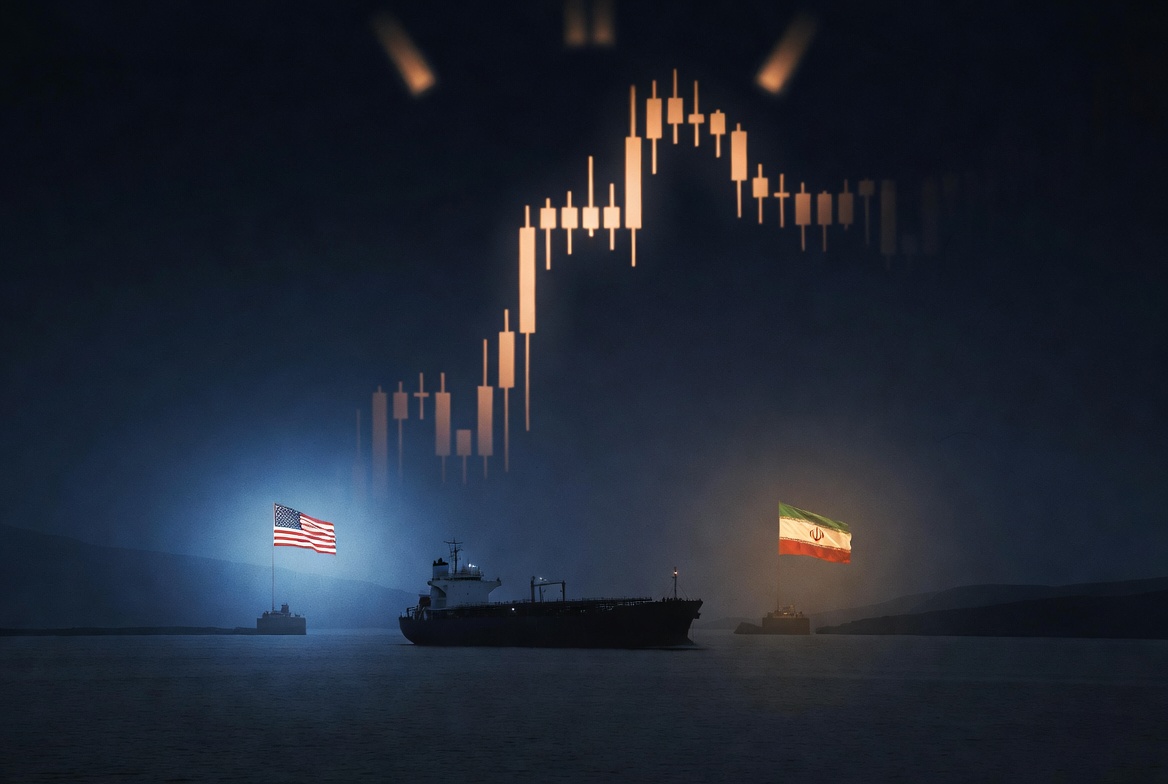
Trump Extended the Iran Ceasefire, But Nothing Has Really Changed for Oil, Gold and the Dollar
Open Vantage →
The desk’s three-broker stack
Pick the broker that matches your priority. Vantage for Tier-1 regulation plus Lloyd’s $1m insurance. E8 Markets for funded trader capital with code KENMACRO at checkout.
Capital at risk. CFD and margin trading carry significant risk of loss. Past performance does not guarantee future results.
Pick the broker that matches your priority. Vantage for Tier-1 regulation plus Lloyd's $1m insurance. E8 Markets for funded trader capital with code KENMACRO at checkout.
The deadline moved. The risk did not. Here is what changed overnight , and what the market is already starting to under-price.
By Ken Chigbo · Founder, KenMacro · 18+ years in markets · Updated live as developments emerge
Jump to section
|
What actually happened |
Asset-by-asset breakdown |
What Actually Happened
The desk's free macro framework
Same lens this article uses, applied across every asset class. Five questions the desk runs before sizing any trade, plus the four lenses we read price through. No email needed to read the page.
By Tuesday morning, the Iran ceasefire extended today narrative did not exist. Every macro trader was positioning for a binary deadline outcome inside 36 hours. Oil was in the mid-$90s. Gold was near a one-week low. The dollar was catching a safe-haven bid.
The binary never arrived. According to reporting across CNBC, Reuters, the New York Times and Fortune, Vice President JD Vance’s Islamabad trip was reportedly paused pending Iran’s response to US negotiating proposals. Brent briefly spiked above $100 as markets priced talks collapsing. Then Trump announced the ceasefire would be extended , not by a fixed number of days, but “until such time as [Iran’s] proposal is submitted and discussions are concluded.” No new deadline.
Oil pared gains immediately. Equity futures lifted into the Asian open. The dollar softened at the margin. By the time London desks sat down Wednesday morning, the narrative had flipped from “deadline incoming” to “indefinite ceasefire” in under twelve hours.
Crucially, reporting indicated Trump also confirmed the US naval blockade of the Strait of Hormuz would remain in place. That single line is the reason this article exists. Markets love relief rallies. They hate second-order consequences. The market heard “ceasefire extended” and bought the relief. It largely ignored what came next.
The Bottom Line Upfront
| ☐ Deadline risk has been removed. Structural risk has not. |
| ☐ The US naval blockade of Hormuz is reported to remain in place. |
| ☐ Iran has not formally agreed to anything. It has been given more time. |
| ☐ Equity markets appear to have removed more premium than the situation warrants. |
| ☐ One headline can reverse the entire move in a single session. |
“Peace headlines are easy to price. Fragile ceasefires are harder. A time extension is not a peace agreement , it is a suspension of the clock on the same underlying situation.”
, KenMacro
Get the framework the desk runs every morning. Free. No card. The same institutional structure the MACRO MASTERY desk uses on every read.
What Changed, What Did Not
Most post-announcement commentary is treating the Trump extended Iran ceasefire story as a clean risk-off unwind. The reality is more nuanced , and the distinction matters for positioning.
Delayed risk vs removed risk
|
What changed • Binary deadline event risk off the board |
What has not changed • Hormuz blockade reportedly in place |
The left column is real , markets were right to remove some premium. The right column is what the market is in the process of under-pricing. An indefinite ceasefire with no firm deadline, no Iranian commitment, and an active blockade is not peace. It is a suspension of the clock.
Why the Market May Be Too Optimistic
1. The headline, not the mechanics. “Ceasefire extended” reads bullish. But the same announcement reportedly confirmed the Hormuz blockade continues. Tanker traffic through the strait was reported to remain heavily disrupted. Removing the deadline did not restart the oil.
2. An indefinite ceasefire is structurally less stable. A hard deadline forces decisions before the clock runs out. An indefinite one removes that forcing function. Either side can walk away at any moment without breaching a specific commitment. The incentive structure that might have produced a deal has just been diluted.
3. One headline can reverse the entire move. The speed at which Brent travelled from the mid-$90s to above $100 and back in a single evening is the most important data point of this cycle. The war premium is not really in price , it is sitting one tweet away. Genuine de-escalation builds slowly. Fragile suspensions collapse in a single news cycle.
ASIC and FSCA regulation. Cent-account option for small balances. Leverage up to 1:1000 on the offshore entity for the high-leverage archetype.
Asset-by-Asset: How Each Market Should Be Thinking About This
Oil
Brent has reportedly pulled back from its brief break above $100 and is trading in the mid-$90s area, with WTI in the low-$90s. On the surface, this looks like the deadline-premium unwind. In practice, oil price after Iran ceasefire remains structurally supported.
The blockade is the tell. Hormuz reportedly handles roughly a fifth of global seaborne oil and LNG. Market reporting suggests tanker flows remain severely disrupted , demand destruction arriving into global supply every day, regardless of whether the ceasefire is extended, broken, or renegotiated. Some analysts argue the structural oil regime has shifted meaningfully higher for 2026 on the energy channel alone.xf
The oil take: Fade aggressive risk-on selling into the low-$90s zone. Shorts here are fighting a structural supply disruption, not trading clean de-escalation. Any fresh headline reintroduces the $100 handle in minutes.
Gold
Gold’s behaviour through this cycle is a textbook case of why retail traders who “buy gold on war” get run over. As covered in how inflation affects forex, gold and stocks, gold competes with real yields, not nominal yields.
Nominal yields have been rising on the oil-driven inflation impulse. Inflation expectations have also risen , but reportedly not as fast. The net effect is real yields grinding higher, which is the primary headwind for an asset that pays no coupon. An extension that keeps the blockade in place keeps oil supported, which keeps the inflation impulse alive, which keeps nominal yields firm.
The asymmetric risk here is actually to the upside: any genuine escalation triggers a pure risk-off flight that compresses yields, weakens the dollar, and rallies gold hard.
The gold take: Near-term pressure can continue while real yields are elevated. But the tail scenario is an asymmetric long. Do not short gold here. Reduce size, or let price come to you at recent support.
Dollar
The DXY has softened at the margin but remains bid in structural terms. The dollar has been supported by two forces simultaneously , yield advantage on the inflation impulse, and safe-haven liquidity demand. The extension has only softened the second.
The yield driver is the more durable one. So long as the oil-driven inflation impulse keeps rate cut expectations pushed back, the dollar’s yield advantage over the euro, sterling and the yen remains. Markets were pricing a more aggressive Fed easing cycle into 2026 before Hormuz closed. That pricing has reportedly been walked back and does not snap back because a deadline moved.
Watch DXY against JPY and CHF specifically. Broad dollar weakness including against other safe-havens signals a genuine risk-on rotation. Dollar weakness only against AUD and NZD while holding firm against JPY and CHF is just a partial unwind of deadline premium.
The dollar take: The immediate fade is real but shallow. Fade extreme dollar selling, especially against JPY. The yen remains the highest-conviction risk-off expression if the situation reverses.
Bonds
The Treasury curve is where the smart money is sitting. 10-year yields remain elevated on the inflation channel. Rate cut expectations have reportedly been pushed back meaningfully since Hormuz closed. A genuine de-escalation would bring cut expectations back onto the curve. A continued blockade with an indefinite ceasefire is worst-of-both-worlds for bonds: inflation pressure stays, but flight-to-quality has unwound. This dynamic is covered in detail in how interest rates move forex markets.
The scenario to watch is a sudden reversal , a headline breaks the ceasefire and you get both inflation-up and risk-off-into-Treasuries simultaneously. That is the rare combination where the curve does something disorderly.
Stocks
Equity markets have reportedly bounced the hardest on the extension, with index futures lifting meaningfully into the Asian open. Some analysts argue the equity complex is already looking past geopolitical risk altogether, treating the headline as permission to re-engage with the AI-led leadership thesis.
This is where complacency looks most likely. The same blockade keeping oil supported is a drag on multinational earnings. Institutional forecasters have reportedly trimmed 2026 S&P targets and raised inflation forecasts on the energy channel. The Nasdaq is the most exposed name , long duration, valuation-sensitive, leveraged to the rate-cut narrative that just got pushed further out.
The equities take: Relief rally credible short-term, likely capped. Fade extreme Nasdaq squeezes. European indices most exposed to oil reacceleration.
FX risk pairs
AUD/JPY has caught a bid on the extension , the cleanest single pair for expressing improved risk sentiment. But the move is notably more contained than previous clean de-escalations, which tells you capital is not fully re-risking.
Short AUD/JPY remains the highest-conviction risk-off expression if the ceasefire reverses. Long CHF pairs remain the secondary hedge. EM FX , USD/MXN, USD/ZAR , is the leveraged play on any escalation return. The fact that these pairs are not deeply unwinding their geopolitical premium is itself a signal. Institutional positioning has kept hedges on.
Four Scenarios, Now Re-Weighted
Our original deadline playbook mapped four scenarios: deal, extension, talks fail, military escalation. The extension scenario has now played out. Here is how the remaining three should be re-weighted from here.
Post-extension scenario map
| Scenario | Rough probability | Market implication |
| Ceasefire holds · talks resume | Base case | Slow grind lower in oil risk premium. Equities capped higher. Dollar softer. |
| Indefinite stasis · no talks | Secondary case | Oil elevated on blockade. Inflation persists. Worst for bonds. Equities choppy. |
| Ceasefire breaks · talks collapse | Not small | Oil back above $100 rapidly. Gold and yen bid. Nasdaq leads declines. |
| Military escalation returns | Tail risk | $110+ oil. Gold rips. Broad equity gap lower. VIX spike. |
The probability-weighted outcome leans neutral-to-cautious. The market appears to be pricing closer to the optimistic end of this distribution than is justified by the underlying mechanics.
ASIC regulated. Strong mid-tier broker with competitive raw-spread accounts and full MT4 and MT5 support.
Trader Playbook for the Post-Extension Regime
The setup has changed. The process has not. Fade extremes, respect asymmetry, keep hedges on, and let the blockade data guide you rather than the ceasefire headline.
How to trade the new regime
Oil
| ☐ Fade aggressive risk-on selling into the low-$90s Brent zone |
| ☐ Do not short a structural supply disruption without tanker flow confirmation |
| ☐ Watch Hormuz shipping data , the real signal, not headline statements |
Gold
| ☐ Do not short here , tail risk is upside |
| ☐ Wait for pullbacks into support before adding length |
| ☐ Gold-silver ratio for the leveraged expression if escalation returns |
Dollar and FX
| ☐ Long USD/JPY pullbacks as yield-driven structural trade |
| ☐ Short AUD/JPY remains the cleanest risk-off hedge on reversal |
| ☐ EUR/USD upside capped while US yield advantage persists |
| ☐ DXY vs JPY and CHF is the confirmation lens |
Equities
| ☐ Fade Nasdaq squeezes into resistance , discount-rate drag intact |
| ☐ Keep energy exposure , beneficiary of structural oil support |
| ☐ European indices most exposed to oil reacceleration |
If this analysis helped you see beyond the headline, the full KenMacro Framework shows you how to read these rotations before they happen , every day, across every market.
Get the Free Framework →
|
Explore the Macro Trading Blueprint →
What Would Change Our View
Four signals would move us from cautious to genuinely constructive.
1. Hormuz reopening. Any formal announcement that the blockade is lifting or Iran is clearing commercial traffic. Single biggest oil catalyst on the board.
2. Iran formally confirming talks. An official statement from Tehran committing to resumed negotiations. Extension rhetoric is currently one-sided.
3. Fed speakers going dovish. If FOMC members signal growth concerns from elevated oil outweigh the inflation impulse, rate cut expectations rebuild and the regime shifts. Watch for “growth risks” language.
4. A genuine Iranian proposal. The extension is tied to Iran submitting a “unified proposal.” If it materialises with substance, a clearer path emerges.
Until at least two of these happen, the cautious base case remains the right one.
FCA, ASIC and FSCA regulation. Lloyd's of London supplementary client-fund insurance up to one million dollars per client. Raw-spread ECN execution.
Final Takeaway: Delayed Risk Is Not Removed Risk
The cleanest way to frame this: what does a professional risk desk do? A pension fund manager running a multi-billion dollar geopolitical hedge does not cancel it because a deadline moved. They size it down, not out. The mechanism that required the hedge is still operating.
The blockade is reportedly in place. Iran has not agreed to anything. The ceasefire is fragile by the admission of reporting on both sides. The only thing that has changed is the clock.
Retail traders often confuse a reduction in probability with a removal of risk. They are not the same thing. Tail risk priced at 30% and then repriced to 15% is still tail risk , and when it fires, it fires at the same magnitude. The correct response is to reduce hedges, not eliminate them. To fade extreme moves in either direction, not chase them. To watch the blockade and the tanker flow data as the real signal rather than the next statement.
Markets removed deadline premium. They have not removed the reason the premium was there. The traders who are best positioned from here are the ones who understand that difference.
Get KenMacro Daily Briefings Before London Open
Join traders receiving macro setups, key levels, and market risk alerts , straight to your inbox before the session starts.
No spam. Unsubscribe any time.
Read the mechanism, not the headline.
The KenMacro Framework gives you the full cross-asset transmission system , how geopolitical shocks, real yields, capital flows and central bank policy connect to every market on your screen.
Continue reading , the KenMacro Iran series
About the author
Ken Chigbo
Founder, KenMacro
Macro trader and educator with 18+ years of markets experience. Started on a London trading floor as a tea boy before moving into institutional FX analyst roles, then full-time trading and education. KenMacro helps serious traders understand what actually moves markets , before the headlines hit. Covering inflation, interest rates, geopolitics, central bank policy, and the forces that drive capital flows globally. Trusted by 3,000+ traders worldwide. kenmacro.com
Frequently Asked Questions: US Iran News Today
Did Trump extend the Iran ceasefire?
According to reporting from CNBC and Reuters, Trump extended the US-Iran ceasefire on Tuesday evening, saying it would continue until Iran submits a unified proposal and discussions conclude. No new deadline was set, though the US naval blockade of the Strait of Hormuz was reported to remain in place.
What does the Iran ceasefire extension mean for oil prices?
Oil price after Iran ceasefire retreated from above $100 after the extension, trading back in the mid-$90s area according to market reporting. With Hormuz shipping reportedly still disrupted and the blockade in place, supply-side pressure remains structural. An extension removes deadline risk but does not remove oil’s underlying war premium.
Is the Iran ceasefire actually holding?
Both sides have reportedly accused each other of breaches. Iran cited the US blockade as a ceasefire violation. The ceasefire is technically in place but described in market reporting as fragile.
Why is the dollar still bid if the ceasefire was extended?
The dollar’s safe-haven bid appears to have faded at the margin but not disappeared. Treasury yields remain supported by the oil-driven inflation impulse, which keeps the dollar’s yield advantage intact. Read the full mechanism in how interest rates move forex markets.
Will gold fall if the ceasefire holds?
Not necessarily. Gold price Iran tensions are being driven more by real yields than by headlines. If yields stay elevated, gold remains under pressure. If the Fed pivots dovish on growth concerns from higher oil prices, real yields could fall and gold could rally despite a holding ceasefire.
How should traders position after the Iran ceasefire extension?
Most macro traders treat the extension as a reduction in immediate deadline risk, not a removal of structural geopolitical risk. The practical approach is to fade extreme relief rallies, keep safe-haven hedges partially intact, and focus on the blockade and Hormuz shipping data as the real signal rather than headline statements.
Sources: market reporting from Reuters, CNBC, CNN, Bloomberg, Fortune, Axios, Al Jazeera, Trading Economics and institutional research houses. This is macro education and market commentary, not financial advice or trade recommendations. Always apply your own risk management. This article is updated live as developments emerge.
Blueberry Markets FREE Macro Desk bundled
Star Trader $50 + 1:1000 leverage
E8 Markets Code KENMACRO
KenMacro earns a commission on broker sign-ups via these links at no extra cost. Capital at risk on all trading.
The MACRO MASTERY desk
The full institutional macro desk, delivered through Discord.
- Live trade ideas with full ladders
- Macro-Flow scanner on Tier A assets
- Weekly scorecard + Sunday Brief PDF
- Daily pulses (London / NY / Asia)
From the desk, free
Get the macro framework the desk actually trades
The same regime-first framework behind every call on this site. Free. No spam, unsubscribe anytime.
Trading around macro shocks?
Gapping, headline-driven tape punishes the wrong broker setup. Check spreads, execution and the entity you open under before you open an account.
Continue reading
From the desk
Where this gets traded
If you trade gold (XAU/USD) around real-yield shifts, CPI or FOMC, execution quality decides the fill. See the KenMacro desk guide to the best brokers for trading gold.
Read the desk guide →