Hormuz Reopened Briefly, Then Fresh Restrictions Returned: What Traders Need Before Monday
Hormuz Reopened Briefly, Then Fresh Restrictions Returned: What Traders Need Before Monday
Weekend Macro Briefing · KenMacro · 19 April 2026
By Ken Chigbo — Macro trader and educator. Founder, KenMacro. Helping serious traders understand what actually moves markets.
This article analyses market reactions to developing geopolitical headlines as reported across major newswires and financial media. Some reports referenced remain fluid and subject to ongoing confirmation. This is macro analysis, not breaking news reporting.
Published: 19 April 2026, 09:00 GMT · Updated: 19 April 2026, 11:00 GMT · 8 minute read
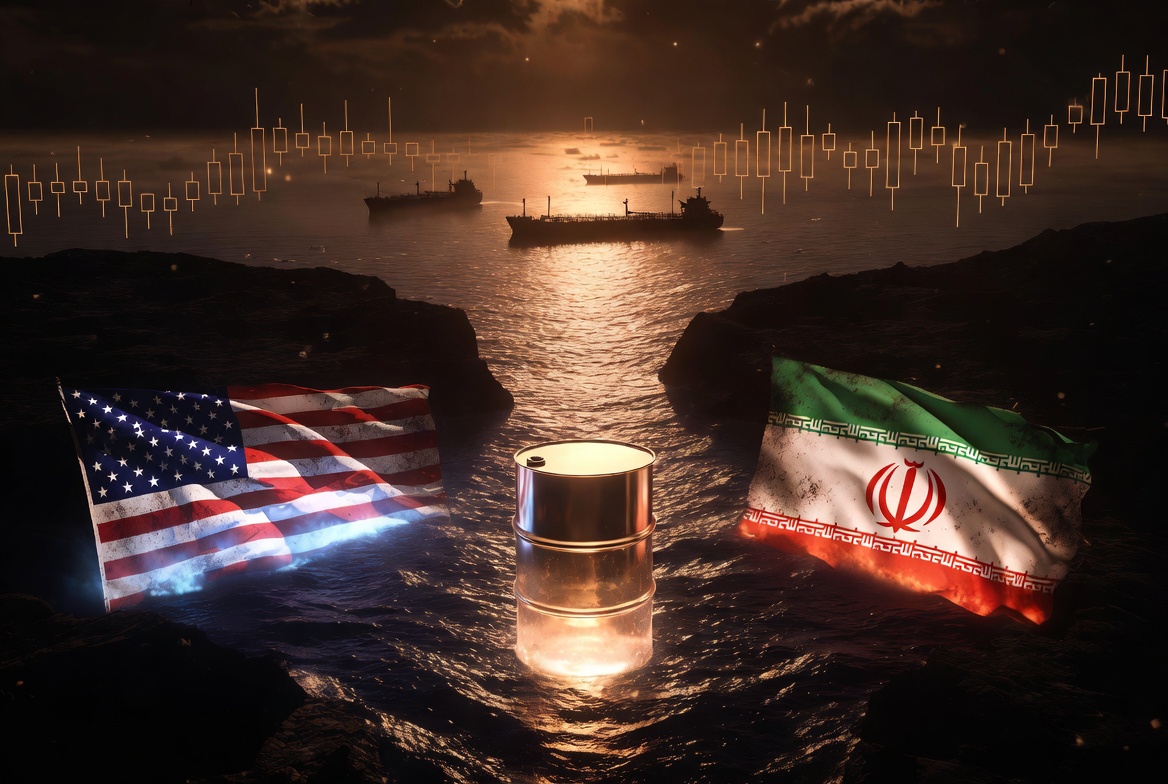
Hormuz oil risk returned to the top of every trader’s agenda this weekend. The Strait of Hormuz reopened briefly, oil crashed, then fresh restrictions were reported. Traders now face potential upside oil gap risk into Monday, with knock-on effects across gold, forex, yields, and equities.
In short: Traders go into the new week facing one of the most headline-sensitive setups of 2026. Reports of de-escalation signals drove oil sharply lower late in the week. Over the weekend, headlines suggested renewed restrictions and rising uncertainty around Hormuz access — reopening gap risk across crude, gold, FX, and equities. A widely reported ceasefire deadline approaches with no confirmed extension and no new round of talks publicly scheduled.
In 30 seconds
| Oil closed weak Friday on reopening signals that were then reversed |
| Weekend restrictions returned — oil faces upside gap risk at Monday open |
| Watch Brent, DXY, Gold, and VIX at Sunday evening open |
| April 22 ceasefire deadline is the pivotal binary event this week |
| No confirmed second round of talks. No formal extension announced. |
Contents
Week-ahead situation as of Sunday 19 April
| Hormuz status — Re-closed by Iran. Ships turned back. Gunfire reported Saturday. |
| Oil Friday close — WTI ~$84, Brent ~$90 after 10%+ crash on reopening hopes |
| Gap risk Monday — Oil likely opens higher. Magnitude depends on weekend headlines. |
| Ceasefire expiry — April 22. Three days. No extension formally announced. |
| Talks status — Progress described by both sides. No date set. Iran requires framework before next meeting. |
Hormuz Oil Risk: Executive Summary
Late last week brought one of the most volatile sessions in oil markets this year. Reports attributed to Iran’s Foreign Minister suggested the Strait of Hormuz would be open to commercial shipping. Oil crashed. Global equities rallied. Traders who had been short crude covered. Risk assets surged on what markets interpreted as a significant de-escalation signal.
Then, according to subsequent reports, restrictions were reimposed.
Within 24 hours of Araghchi’s announcement, the US confirmed its naval blockade of Iranian ports would remain “in full force and effect” regardless of the Hormuz opening. Iran responded by rescinding the reopening. Ships were turned back. Reports cited maritime incidents involving commercial vessels near the strait, with ships reportedly turned back. Further incidents were reported off the Omani coast, though precise details remain subject to independent verification.
This sequence — if reports are confirmed — would represent one of the most important lessons in geopolitical macro trading: a headline is not a position change until it is confirmed and durable. Oil’s decline priced a scenario markets later questioned within hours — and traders heading into Monday face renewed uncertainty, potential gap risk, and a ceasefire deadline with no confirmed extension.
The temporary de-escalation repricing: The reopening announcement was real. The duration was not. Traders who held oil short into the weekend are now exposed to a reversal of Friday’s entire move at Sunday open. This is what gap risk looks like in practice.
Monday open checklist
| ☐ Brent opening level vs Friday close (~$90) |
| ☐ Any official US or Iran statement overnight |
| ☐ Shipping updates from the strait (Reuters, Lloyd’s List) |
| ☐ DXY direction at open — rising = safe-haven or inflation bid |
| ☐ Gold reaction — confirms or denies risk-off regime |
| ☐ VIX futures — above 22 signals institutional hedging |
| ☐ S&P 500 futures direction and magnitude of gap |
Iran US Talks Update: How Markets Read the Week’s Developments
Key events — week of 14–19 April 2026
|
13 Apr Reports of US naval posture shift in the region Following reported breakdown of diplomatic contacts. Oil spiked on escalation risk. Brent reportedly touched $101 intraday per media coverage. |
|
14–16 Apr Mediation efforts reported, cautious optimism signals emerge Reports cited third-party mediation efforts. US officials described talks as progressing. Oil retreated on reduced risk premium. No talks date publicly confirmed. |
|
17 Apr — 15:00 GMT Reports suggest Hormuz reopening signal from Iran Markets interpreted statements attributed to Iran’s FM as a reopening signal. Oil moved sharply: WTI reportedly fell ~12%, Brent ~9%. Equities rallied broadly. US officials responded positively per media reports. |
|
17 Apr — 18:00 GMT US signals continued regional naval posture Reports attributed to the US indicated its naval posture would remain regardless of the Hormuz signal. Markets interpreted this as a complicating factor. Sentiment softened. |
|
18 Apr — Critical Fresh restrictions return. Maritime incidents reported. Iran rescinds reopening. Maritime incidents reported near the strait. Ships reportedly turned back per multiple sources. Strait effectively re-closed. |
|
19 Apr — Today Hormuz closed. April 22 in 3 days. Gap risk open. Oil markets closed at distressed Friday lows. The physical situation has worsened. Ceasefire expires Tuesday. No talks date set. Traders face one of the most asymmetric weekend gap setups seen during this episode. |
Why Hormuz Oil Risk Still Matters — The Numbers That End the Debate
Every time optimism surfaces in the Iran talks, there is a temptation to dismiss Hormuz risk as already-priced or structurally resolved. Friday’s sequence should permanently retire that view. The Strait went from closed to open to closed again in under 24 hours. The oil market moved 12% in a single session on the opening, then faces a full reversal before Monday.
The reason the numbers matter is that Hormuz cannot be replaced. There is no alternative route that absorbs its volume. As covered in the original blockade analysis, the strait carries approximately 20 million barrels per day — roughly 20% of global seaborne oil trade. It also carries approximately 20% of global LNG trade.
The key exporters routing through Hormuz include Saudi Arabia, the UAE, Iraq, Kuwait, Qatar, and Iran itself. Qatar’s LNG, which is the critical feedstock for European energy security following Russia’s supply cuts, transits exclusively via Hormuz. There is no LNG pipeline alternative. A sustained Hormuz closure does not just affect oil — it affects gas pricing, electricity generation, and industrial costs across Europe and Asia simultaneously.
Analysts cited by Reuters estimated that a significant share of Gulf flows remain at risk, with some projections running into the millions of barrels per day depending on closure duration and severity. That figure represents a supply shock larger in barrels than the 1973 oil embargo and the 1979 Iranian Revolution combined. Markets are not fully pricing a sustained Hormuz closure — they are pricing a probability distribution. Any shift in that distribution moves oil immediately.
The second-order effects that most traders miss: tanker insurance for Gulf voyages has risen dramatically, pushing effective per-barrel transport costs higher even for ships that do transit. Airline fuel hedging costs have surged. European jet fuel inventories remain under pressure. The International Energy Agency has noted it holds strategic reserves that can be deployed to offset supply shocks, but warned that adequacy depends on disruption duration. Consumer inflation from energy costs is feeding back into services inflation in a way that CPI prints are only beginning to capture.
Market Outlook Monday: Cross-Asset Impact This Week
Cross-asset reaction matrix — week of 21 April
| Asset | Diplomatic progress | Holding pattern | Escalation |
| Brent / WTI | Falls below $85. Risk premium exits. |
Volatile $88–96. Headline driven. |
Snaps to $100+. Gap risk severe. |
| Gold | Mixed. Haven demand fades. Inflation eases. |
Firm. Uncertainty supports both sides. |
Strong bid. Haven + inflation hedge align. |
| DXY | Weakens. Haven bid and oil support exit. |
Sideways. Competing inflation / risk flows. |
Sharp bid. Safe-haven demand returns hard. |
| S&P 500 | Gap higher. Energy sector lags. Tech leads. |
Flat to -1%. Earnings season absorbs some. |
Gap lower. Energy outperforms. VIX spikes. |
| 10Y Yield | Falls below 4.2%. Cut bets revive. |
Holds 4.2–4.35%. Indecision. |
Pushes 4.5%+. Inflation shock dominates. |
| JPY / CHF | Both weaken. Risk appetite returns. |
Range. No clear directional conviction. |
Both surge. Classic safe-haven flows. |
| EM FX | Broad rally. Risk appetite returns. |
Mixed. Exporters vs importers diverge. |
Broad selloff. Capital flies to USD and JPY. |
Want briefings like this every week?
Get the free KenMacro Macro Framework and weekly market breakdowns before Monday open.
Oil Price Forecast: The Gap Risk Framework for Monday
WTI closed Friday around $84 and Brent near $90 — both priced on a Hormuz reopening that has since been reversed. The physical situation Saturday was deteriorating: reports of maritime incidents near the strait and ships being turned back, alongside Iran re-closing the strait. Sunday evening futures open is the first liquid expression of that reversal.
The potential gap risk is asymmetric. Oil’s decline was sharp and fast — driven by short covering and algorithmic reaction to headlines. A reversal driven by renewed restriction reports could be equally sharp. The same transmission chain that ran down on Friday runs back up when the reopening is confirmed as fake. Watch the $90 Brent area as a key reference — a sustained move above it would signal the risk premium is rebuilding.
Gold Outlook: Safe-Haven and Inflation Hedge Converge
Gold is in an unusually powerful setup for escalation scenarios. Both the safe-haven demand driver and the inflation hedge driver are pointing in the same direction — upward — if Hormuz remains closed and ceasefire talks fail. The Friday risk-on move will have put some pressure on gold as risk appetite returned. That pressure is now potentially being removed as rapidly as it arrived.
Forex Market Week Ahead: The Dollar’s Two Conflicting Forces
The DXY faces competing forces this week. Escalation brings safe-haven dollar demand. But higher oil also reignites inflation fears that could force the Federal Reserve to maintain rates longer, which is also dollar-supportive. Diplomatic progress removes both supports simultaneously. The path of least resistance in a holding pattern is a range-bound, volatile dollar with sharp intraday moves on every headline.
Brent Crude and Gold: Key Levels to Watch This Week
|
Brent crude levels
|
Gold levels
|
Hormuz Oil Risk Scenarios: Three Outcomes for the Week Ahead
Three scenarios — week of 21 April 2026
|
Scenario A — 25%
|
Diplomatic progress — new talks confirmed before April 22 |
A second round of formal talks is confirmed before the ceasefire expiry. A ceasefire extension is formally announced. Hormuz reopens again — and this time durably. Oil retraces Friday’s losses and trades toward $80. Risk assets rally. DXY softens. Yields fall.
Why 25%: Both sides describe progress, but the structural gap on nuclear enrichment and Hormuz control remains unresolved. Saturday’s shooting incident makes a fast-track agreement harder to achieve. Iran’s parliament speaker has said no meeting can happen without a framework of understanding first.
|
Scenario B — 45%
|
Holding pattern — messy diplomacy, no breakthrough, April 22 fudged |
No second round of formal talks is confirmed. April 22 approaches without a clear extension or new framework — but both sides step back from full escalation. The ceasefire is allowed to lapse technically while indirect messaging continues. Hormuz stays largely closed but shooting incidents do not escalate to direct confrontation. Markets face sustained volatility and headline sensitivity. Oil trades $88–96 range. VIX elevated.
Why 45%: This is the historical pattern of Middle East negotiations. Deadlines arrive without resolution but also without immediate escalation. Both Washington and Tehran have economic incentives to avoid full resumption of hostilities.
|
Scenario C — 30%
|
Escalation — ceasefire lapses hard, Hormuz fully closed, shooting incidents multiply |
April 22 arrives with no framework, no extension, and no new talks. Iran declares the ceasefire officially over. The US blockade intensifies. Iran moves to fully reimpose Hormuz restrictions with active enforcement. Saturday’s shooting incidents become the template rather than the exception. Oil gaps violently higher toward $100+. VIX spikes above 30. Risk assets sell off hard.
Why 30%: Saturday’s rapid deterioration — Hormuz closed again within 24 hours of opening, with reported maritime incidents — suggests this scenario is closer to the baseline than markets priced on Friday. The gap between where oil closed and where the physical reality sits is significant.
Why This Matters Even If You Don’t Trade Oil
Most readers of this briefing trade forex, indices, or gold — not crude oil futures. The reason this matters to every trader is the transmission chain that runs from oil through every other asset class simultaneously.
The transmission chain — oil to everything else
| Oil higher → Inflation risk rises → Yields reprice higher |
| Higher yields → Tech and growth stocks under valuation pressure |
| Dollar strengthens → EUR/USD, GBP/USD, AUD/USD all fall |
| Risk-off flows → JPY and CHF strengthen, EM currencies sold |
| Gold bids → Safe-haven + inflation hedge demand converge |
This is why a closed Hormuz is not an energy-sector story. It is a whole-portfolio story. Every major asset reacts within hours of a confirmed supply disruption or confirmed resolution. Understanding the transmission chain is what separates traders who anticipate moves from those who react to them.
Want to understand how macro traders read events like this before markets move?
Section 6: Hidden Second-Order Risks Smart Traders Watch
The primary risk is obvious: oil stays elevated and reprices inflation expectations globally. The second-order risks are where the real edge sits in geopolitical macro trading.
Tanker insurance repricing. War-risk insurance premiums for Gulf voyages have risen dramatically since February. Even if physical oil flows resume, the insurance cost creates a persistent price floor above pre-war levels. Shippers who have already rerouted around the Cape of Good Hope face voyage costs that are structurally higher regardless of Hormuz status. This shows up in shipping cost indices before it shows up in CPI.
Qatar LNG squeeze. Qatar is the world’s second-largest LNG exporter. All of its LNG transits Hormuz. European gas prices — already elevated post-Russia — face a supply cliff that is not reflected in oil prices alone. Any sustained Hormuz closure produces a natural gas spike that is independent of crude, hits electricity generation costs, and feeds into core inflation in ways that central banks cannot offset through rate policy.
Airline margin compression. Jet fuel costs account for 20–30% of airline operating costs. European jet fuel inventories are reportedly at critically low levels. Any further oil spike hits airline earnings directly and airlines have limited ability to pass those costs to consumers instantaneously. Airlines are not an oil hedge — they are an oil victim.
Central bank repricing. The Federal Reserve, ECB, and Bank of England all face a supply-driven inflation shock they cannot address through rate policy alone. Raising rates to fight oil-driven inflation risks crashing demand and growth simultaneously — the stagflation trap. Rate cut expectations that the market had begun pricing in for H2 2026 are put back under sustained pressure every week Hormuz stays closed.
EM stress propagation. Emerging market countries that import oil — India, Turkey, South Africa, much of Southeast Asia — face deteriorating current accounts, weaker currencies, and rising domestic inflation simultaneously. EM sovereign spreads are a leading indicator of where this stress surfaces first. Watch them alongside oil.
Section 7: Indicators and Charts to Monitor This Week
Week-ahead watchlist — priority order
|
|||
|
|||
|
|||
|
|||
|
|||
|
|||
|
“Markets are not pricing outcomes. They are repricing probabilities in real time.”
— KenMacro
Section 8: Tactical Trader Mindset for This Week
Friday was a masterclass in why news-driven trading is the most dangerous game in markets. Iran opened Hormuz. A decade of traders who had been conditioned to sell oil on any de-escalation signal did exactly that, producing a 10%+ crash in a single session. By Saturday, the move was already in question. By Sunday evening, those same traders face a market that may open sharply against their Friday position.
Do not trade the headline. Trade the reaction. The professional read on Friday was not “oil should fall because Hormuz is open.” It was “is this opening durable? Does the US blockade change support this?” The answer to both was immediately suspect — and the traders who asked those questions before acting are the ones who are not sitting with significant directional exposure into Monday.
Distinguish fear premium from real disruption. When oil rallied above $100 after the Islamabad breakdown, some of that move was a genuine supply risk premium. Some was fear premium driven by positioning and sentiment. The two decay at different rates. Fear premium can evaporate in hours on a headline, as Friday demonstrated. Real supply disruption premium — the physical supply tightness analysts estimate from reduced Gulf flows — does not evaporate until actual flows resume. Friday’s crash partly priced out fear premium while the physical disruption remained. That gap is where the Monday setup lives.
Respect gap risk above all else. Markets that close on a major catalyst — as oil closed Friday on the Hormuz reopening — face the highest gap risk when that catalyst is reversed. The Sunday evening open is the most important price of the week. Do not assume Friday’s close is a valid starting price for Monday’s trading.
Watch cross-market confirmation. The four forces that drive market moves confirm or deny each other. If oil gaps higher but gold does not move and yields fall — the equity market is not pricing escalation, just a supply adjustment. If oil gaps higher and gold surges and yields rise and the VIX jumps and the DXY bids simultaneously — the full risk-off regime is reinstating and position accordingly.
The week in one sentence: You are trading the probability that diplomatic progress before April 22 is real, durable, and produces a framework that removes Hormuz as a tactical weapon — not just a headline that lasts 24 hours.
Section 9: The Bottom Line
This weekend produced one of the sharpest reminders of the year about how geopolitical markets work. The reopening signal on Friday appeared genuine. The oil move was rational. The reversal over the weekend reflected how quickly the picture changed. Markets that price probabilities rather than outcomes can reprice just as fast in one direction as the other.
Heading into the new week, traders face a situation where oil closed at Friday lows priced on a reopening that has since been reversed, the ceasefire expires on April 22 without a confirmed extension, and Saturday’s incidents suggest the physical situation has deteriorated rather than stabilised. The pattern since Islamabad has been optimism followed by reality, and then more optimism. Each cycle is adding volatility rather than reducing uncertainty.
The most dangerous position into Monday is short oil at Friday’s close. The most dangerous positioning assumption is that Friday’s equity rally reflects a durable de-escalation. The most useful analytical frame is to assign realistic probabilities to three scenarios and size accordingly — rather than predicting which one will happen.
The Strait is 34 kilometres wide at its narrowest point. Every major oil market move of the past seven weeks has been caused by changing expectations about what transits those 34 kilometres. That will remain true this week.
How KenMacro Analyses Events Like This
Every KenMacro geopolitical briefing is built on the same analytical framework — the one that separates positioning from noise and probabilities from predictions.
| Cross-asset confirmation — A macro move is only high-conviction when multiple asset classes confirm the same direction simultaneously. |
| Policy incentives — What does each side gain or lose from escalation vs resolution? Incentive mapping tells you more than official statements. |
| Supply chain transmission — Every physical disruption flows through transportation costs, insurance, inventory, inflation, and then rates. We follow the full chain. |
| Positioning vs narrative — Markets move when positioning and narrative diverge. Friday’s oil crash was positioning catching up to a headline. The Monday gap risk is positioning catching up to a reversal. |
| Probabilities, not predictions — We assign scenario probabilities rather than calling outcomes. Markets price distributions. So should you. |
Frequently Asked Questions
Why did oil prices crash on Friday 18 April 2026?
Iran’s Foreign Minister Araghchi declared the Strait of Hormuz completely open during the Lebanon ceasefire. WTI fell around 12% to ~$84 and Brent fell roughly 9% to ~$90 as the geopolitical risk premium compressed sharply on reopening hopes.
Why did Iran close the Strait of Hormuz again?
According to weekend reports, restrictions were reimposed after the US indicated its naval posture would remain unchanged regardless of the reopening signals. Details of the sequence remain fluid, but reports indicated the US naval posture would remain in force despite the Hormuz opening. Iran responded by rescinding the reopening. Multiple reports cited maritime incidents near the strait, with ships reportedly turned back.
What is the oil gap risk for Monday 21 April?
Oil closed Friday priced on a Hormuz reopening that has since been reversed. With the strait re-closed and shooting incidents reported Saturday, oil faces significant upside gap risk at Sunday evening open. Watch Brent above $93 as the key escalation signal.
What is the Strait of Hormuz and why does it matter?
The Strait carries approximately 20% of global seaborne oil trade and 20% of global LNG trade. Around 20 million barrels per day normally flow through it. Saudi Arabia, UAE, Iraq, Kuwait, and Qatar all route major exports through the strait. The US Energy Information Administration tracks Hormuz flows as one of the world’s critical chokepoints. There is no adequate alternative route.
What assets rise when Hormuz disruption risk increases?
Oil prices spike. Gold benefits from both safe-haven demand and inflation hedging. The US dollar bids on haven flows. Treasury yields face upward pressure from inflation repricing. Energy sector stocks outperform. Airlines, consumer sectors, and energy-importing emerging market currencies face the most pressure.
How does Iran affect forex markets?
Iran affects forex primarily through the oil-inflation-rates transmission chain. Higher oil raises inflation expectations, reduces central bank room to cut rates, supports the dollar’s yield premium, and pressures energy-importing currencies. Energy exporters — Canadian dollar, Norwegian krone — benefit. The yen and Swiss franc strengthen on risk-off flows.
What should traders watch at Monday open on 21 April 2026?
Watch oil futures at Sunday evening open for gap direction. Monitor diplomatic headlines for any talks confirmation before April 22. Track VIX, 10-year Treasury yields, and the DXY for cross-asset confirmation. Any confirmed second round of talks is the single most powerful bullish signal. A ceasefire lapse on April 22 without a framework is the most powerful bearish signal for risk assets.
Will stocks fall if oil prices rise this week?
Not automatically — but sustained higher oil increases inflation expectations, which puts upward pressure on Treasury yields. Higher yields compress equity valuations, particularly for technology and growth stocks. Energy sector stocks typically outperform when oil rises. Airlines, consumer discretionary, and import-heavy sectors face the most direct earnings pressure from higher energy costs.
Which currencies benefit from higher oil prices?
Energy-exporting currencies benefit most from higher oil. The Canadian dollar (CAD) and Norwegian krone (NOK) are the most liquid direct plays on oil price increases. The Russian rouble also historically benefits though it faces separate sanctions dynamics. Conversely, energy-importing currencies — the Japanese yen — which often strengthens on safe-haven flows during risk-off stress despite Japan being an energy importer — plus most emerging market currencies and the euro, which face direct pressure from higher energy costs.
If you want a repeatable system for reading geopolitical macro moves before they reprice — the free KenMacro Framework and the Macro Course give you the tools to position before the consensus catches up.
Join traders learning how macro really moves markets.
Stop reacting to headlines. Learn the cross-asset framework before the move.
Analysis based on reporting from Reuters, CNBC, Al Jazeera, CBS News, Euronews, and AP. Market data referenced from financial media coverage. All geopolitical reports remain subject to ongoing verification. This is macro analysis, not primary news reporting. Market data as of 18–19 April 2026. This is macro analysis and does not constitute financial advice. Situation is live and may have changed since publication.
Brokers (audited by KenMacro)
Blueberry Markets FREE Macro Desk bundled
Star Trader $50 + 1:1000 leverage
E8 Markets Code KENMACRO for 5% off
KenMacro earns a commission on broker sign-ups via these links at no extra cost. Capital at risk on all trading.
The MACRO MASTERY desk
The full institutional macro desk, delivered through Discord.
- Live trade ideas with full ladders
- Macro-Flow scanner on Tier A assets
- Weekly scorecard + Sunday Brief PDF
- Daily pulses (London / NY / Asia)