April 22 Deadline Nears: What Happens to Oil, USD and Stocks if Iran Talks Fail or Succeed
April 22 Deadline Nears: What Happens to Oil, USD and Stocks if Iran Talks Fail or Succeed
Macro Insights · KenMacro · 17 April 2026 · By Ken Chigbo
Published: 17 April 2026, 09:00 GMT · Updated: 17 April 2026, 10:30 GMT
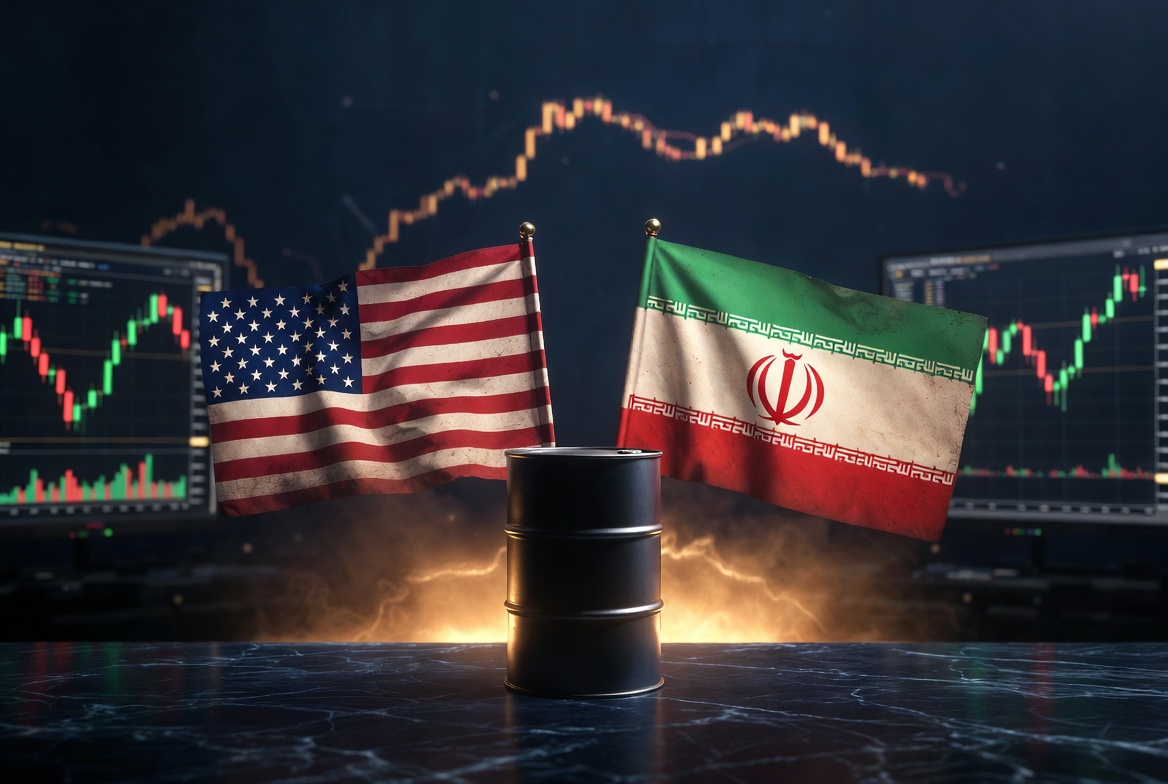
The ceasefire clock is ticking. Markets are pricing diplomacy, but nothing is signed. Oil remains elevated. The dollar is vulnerable. Heading into a weekend, headlines can move faster than liquidity. Here is the trader playbook before April 22.
In short:If talks improve, oil likely falls, the dollar softens and equities benefit. If talks fail, oil spikes, the dollar strengthens and risk assets face pressure. The April 22 ceasefire deadline is the binary event that decides which of those two chains runs next week.
In 30 seconds
| Deadline: Ceasefire expires April 22 — no extension formally announced |
| Diplomacy: Pakistan mediating; no confirmed date for second-round talks |
| Oil: Brent around $98, elevated but below post-Islamabad spike |
| Europe: Macron and Starmer hosting Hormuz summit today |
| Three scenarios below — with full market reaction breakdown |
Traders need to know
| April 22 — binary ceasefire deadline. No extension formally announced yet. |
| Oil below $100 — markets pricing the middle scenario, not full escalation. |
| Confirmed talks — bullish risk assets. Oil falls. Dollar softens. Yields drop. |
| Failed talks — bullish oil and USD. Equities gap lower. Inflation expectations spike. |
| Weekend headlines — thin liquidity means moves can run without correction until Monday. |
Markets are heading into the weekend with a hard deadline approaching and no confirmed path forward. The two-week ceasefire between the United States and Iran expires on April 22. As of the latest public reporting, no second round of formal talks had been scheduled and no ceasefire extension had been formally announced. What exists is a holding pattern maintained by Pakistani mediation, guarded US optimism, and a series of positive signals that have not yet produced a confirmed meeting.
Geopolitics moves markets through expectations, not events. What matters is not whether a deal is reached this weekend — it is whether the probability of a deal by April 22 moves higher or lower. Oil, yields, the dollar, and global equities are all priced on that single probability. Any signal that shifts it moves all of them.
Where We Are Now: The Timeline
|
28 Feb 2026
US-Israel strikes on Iran begin
Strait of Hormuz traffic moves to near standstill. Brent surges above $113.
7–8 Apr 2026
Ceasefire announced
Two-week ceasefire brokered via Pakistan. Expires April 22. Markets rally. Oil drops sharply.
12 Apr 2026
Islamabad talks collapse after 21 hours
Nuclear enrichment, sanctions relief, and Hormuz control remain unresolved. US announces naval blockade of Iranian ports. Oil spikes back above $100.
14–16 Apr 2026
Indirect diplomacy via Islamabad
Pakistani Army Chief Munir travels to Tehran carrying Washington’s message. White House says talks “productive and ongoing.” No date set for second round. Iran’s FM confirms messages passing but no agreement reached.
17 Apr 2026 — Today
Weekend risk window opens
Trump says “very close to making a deal.” Brent at $98.05, WTI at $93.40. Macron and Starmer host 30-nation Hormuz summit. No second round confirmed. Ceasefire in 5 days.
22 Apr 2026
Ceasefire expires
Without extension or new framework, both parties revert to pre-ceasefire posture. No formal extension has been requested by Washington as of Thursday.
|
KenMacro
What the US Is Saying
On Thursday, Trump told reporters outside the White House that Iran had offered not to possess nuclear weapons for more than twenty years, and said: “I think we’re very close to making a deal with Iran.” This followed a string of optimistic signals from the White House through the week, with press secretary Karoline Leavitt telling reporters Wednesday that conversations are “productive and ongoing” and that the administration feels “good about the prospects of a deal.”
Leavitt added that discussions about further in-person talks “are being had, but nothing is official.” She said any second meeting would most likely be held in Islamabad. As of Thursday, no ceasefire extension had been formally announced — a significant omission given the deadline is five days away.
The tension: Optimism from Washington and silence on a formal extension request are not contradictory — but they leave the market in a probabilistic vacuum. Markets cannot price a deal that has not been confirmed, or an extension that has not been formally requested.
What Pakistan Is Doing
Pakistan’s Army Chief Syed Asim Munir arrived in Tehran on Wednesday carrying a message from Washington, according to reporting from Al Jazeera and CNN. He met Iranian Foreign Minister Abbas Araghchi. Iran’s state media confirmed the meeting. Araghchi expressed appreciation for Pakistan’s hosting role and confirmed that “messages continue to pass” between the two sides.
Pakistan’s Foreign Ministry confirmed that the US and Iran are in discussions through Islamabad to hold a second meeting, but added that no date has been set. Munir’s dual-track effort — messaging from Washington to Tehran while Pakistan’s Prime Minister Sharif is engaged with Gulf allies — represents the most active mediation posture seen since the original ceasefire was brokered.
What Iran Is Saying
Iran’s position remains publicly cautious. Iranian Foreign Ministry spokesman Esmaeil Baghaei confirmed that messages are passing between the two sides, but no agreement has been reached on formal talks. Tehran has not publicly validated the level of optimism coming from Washington.
After the Islamabad collapse, Iranian Foreign Minister Araghchi posted that Tehran’s team had encountered “maximalism, shifting goalposts, and blockade” from the US side. Iran’s Parliament speaker said the US had failed to gain Iran’s trust. Iran’s military leaders, meanwhile, have signalled they could extend any Hormuz disruption to broader waterways including the Persian Gulf, Gulf of Oman, Red Sea, and Bab el-Mandeb — a threat that, if credible, significantly expands the global energy supply risk beyond what current oil pricing reflects.
The core sticking points from Islamabad remain unresolved: Iran’s uranium enrichment and stockpiles, the terms of any sanctions relief, the status of the Hormuz blockade, and the duration of any enrichment halt. These are not procedural disagreements. They are structural ones.
US-Iran Talks Weekend Scenario Playbook
Weekend scenario playbook — April 17–21
| Scenario 1 — Constructive |
| Weekend talks confirmed, ceasefire extended, interim framework signalled |
| Second round announced. Ceasefire formally extended beyond April 22. Interim memorandum language surfaces. |
|
Oil Sharp drop below $90. Risk premium compresses fast. |
USD Weakens. Safe-haven bid evaporates. DXY gives back geopolitical premium. |
|
Yields 10-year moves toward 4.1%. Inflation expectations soften on lower oil. |
Equities Gap higher Monday open. Tech and consumer discretionary lead. |
|
Gold / EM FX Gold dips on reduced haven demand. EM currencies broadly recover — energy importers gain most. |
|
| Scenario 2 — Holding Pattern |
| No breakthrough but no collapse — deadline approached, messy holding pattern |
| No confirmed second round. No formal extension announced. Indirect messaging continues. Markets forced to price ambiguity through the weekend. |
|
Oil Stays above $95. Risk premium partially maintained. Volatile intraday. |
USD Sideways to slightly firmer. Uncertainty supports partial safe-haven demand. |
|
Yields 10-year holds 4.2–4.3%. Fed cut expectations stay suppressed. |
Equities Flat to slightly lower Monday. Energy sector modestly outperforms. |
|
Gold / EM FX Gold firm. Uncertainty provides support. EM mixed — energy exporters steady, importers under pressure. |
|
| Scenario 3 — Hard Reset |
| Talks fail, rhetoric hardens, April 22 becomes a hard risk event |
| No framework by April 22. Ceasefire lapses. Both sides revert to pre-ceasefire posture. Iran reactivates full Hormuz disruption. US blockade intensifies. |
|
Oil Violent snap higher. Brent retests $110+. Sunday night gap risk is material. |
USD Sharp bid. Safe-haven demand returns hard. DXY recovers recent losses fast. |
|
Yields 10-year pushes toward 4.5%+. Inflation expectations reprice sharply higher. |
Equities Gap lower Monday. Energy the exception. Risk-off positioning returns broadly. |
|
Gold / EM FX Gold strong bid — haven and inflation hedge combine. EM broad selloff. Energy importers hit hardest. Capital flows to USD and JPY. |
|
KenMacro
Markets move before headlines are obvious.
The Macro Transmission Chain
Every asset in the scenario matrix above is connected through the same transmission chain — the same one covered in depth in the KenMacro Macro Course. It is worth making it explicit here, because this is where the four forces that drive currency markets converge on a single geopolitical inflection point.
A constructive diplomatic signal compresses the oil risk premium. Lower oil softens energy-driven inflation expectations. Softer inflation expectations reduce pressure on the Federal Reserve to maintain elevated rates. Revived rate cut expectations weaken the dollar’s yield advantage. Capital moves outward from the dollar into risk assets. Equities benefit. EM FX recovers. The chain runs clearly in one direction.
The reverse is equally clean. A failed ceasefire snaps oil back above $100. Inflation expectations harden. Fed cut bets get pushed out again. The dollar bids. Treasury yields reprice higher. Risk assets face valuation pressure. The chain is the same one that has been operating since late February. The only variable that changes is which direction it runs.
The asymmetry: Oil at $98 is not pricing full escalation. It is pricing a contested middle scenario. The downside if talks fully collapse is material. The upside if a genuine framework emerges is also material. The market is sitting in the uncertainty band between both outcomes. That is where weekend headline risk is most dangerous.
What Traders Should Watch Into the Weekend
Want the full macro framework professionals use before headlines hit?
Free 5-Minute Macro Framework Traders Use Before Headlines Hit →
|
Explore the Macro Course →
The European Dimension
While Washington and Tehran negotiate through Pakistani intermediaries, Europe is conducting a parallel diplomatic track that the oil market has not fully priced.
France and the UK today co-chair a meeting of approximately 30 nations — including Germany, Italy, and Asian and Middle Eastern partners — to discuss a coordinated multinational mission to restore freedom of navigation in the Strait of Hormuz once the conflict ends. Macron said the mission would be “purely defensive” and separate from the warring parties. Starmer committed to establishing “a multinational initiative to protect freedom of navigation.”
Germany is reportedly considering contributing minehunting vessels, according to reporting by Euronews. A French official was quoted in reporting from Times of Israel as saying allies needed assurances that Iran would not fire on passing ships and that the US would not block vessels entering or leaving the strait.
The economic pressure on Europe is not abstract. According to reporting citing the International Energy Agency chief, the head of the International Energy Agency warned this week that Europe may have “maybe six weeks or so of jet fuel left” if the disruption persists. That is not a background risk. That is a live economic constraint that European central banks, governments, and businesses are pricing into their planning horizons.
The significance for markets: Europe acting independently to secure Hormuz navigation signals that the shipping disruption is being treated as a structural problem requiring a structural solution — not simply a negotiating variable that disappears when a deal is reached. That backstop, if credible, provides a medium-term floor to the Hormuz supply risk premium.
A ceasefire without a deal is a countdown. The April 22 deadline is the market’s reminder of that.
The Bottom Line
The US-Iran talks entering this weekend risk window in a state that is neither optimistic enough to clear risk nor pessimistic enough to force it. That middle ground is the most dangerous market environment — not because the likely outcome is catastrophic, but because weekend liquidity conditions mean that any headline, in either direction, will run further than it would on a Tuesday afternoon in New York.
The same repricing chain that ran last week when Trump said the war was “close to over” is available in both directions this weekend. Oil at $98 is not pricing peace. It is pricing probability. Markets remain priced for an uncertain middle-ground outcome.
What changes that estimate: an official confirmation of talks, an extension of the ceasefire, a signal from Tehran that matches Washington’s optimism — or the absence of all three as April 22 approaches.
The Islamabad breakdown was the market’s reminder that ceasefire and deal are different things. The April 22 deadline is the market’s reminder that a ceasefire without a deal is a countdown. The weekend is where those two realities converge.
The difference between a constructive headline and a failed one this weekend is not nuance. It is repricing.
Frequently Asked Questions: US-Iran Talks and Markets
What happens to oil prices if Iran talks fail?
If the ceasefire expires on April 22 without a new framework, the geopolitical risk premium returns to oil markets in full. The Strait of Hormuz carries roughly 20% of global seaborne oil supply. A return to active disruption would push Brent back above $100 sharply — with speed dependent on weekend liquidity conditions.
How do Iran ceasefire talks affect the dollar?
Constructive Iran ceasefire talks reduce the safe-haven bid in the dollar and soften inflation expectations that had been keeping Fed rate cut bets suppressed. When Iran talk optimism rises, the dollar typically weakens. When talks collapse, the safe-haven bid returns and the dollar strengthens.
Why does the April 22 deadline matter for markets?
April 22 is when the two-week US-Iran ceasefire expires. Without a new framework or formal extension, both sides technically revert to pre-ceasefire posture. This makes it a hard binary event for oil and risk assets — not a gradual repricing but a potential gap risk, particularly dangerous over a weekend when liquidity is thin.
What is Pakistan’s role in the Iran talks?
Pakistan is acting as the primary diplomatic intermediary between Washington and Tehran. Pakistan hosted the first round of direct talks in Islamabad on April 12. Since the breakdown, Pakistan’s Army Chief has been travelling between capitals carrying messages from both sides. A second round, if it happens, is expected to take place in Islamabad again.
Stop reacting after moves happen. The free KenMacro Framework gives you the macro transmission system — and the KenMacro Macro Course takes you deeper into reading every scenario like this one in real time.
About the author
|
Ken Chigbo Founder, KenMacro Macro trader and educator helping serious traders understand what actually moves markets — before the headlines hit. Covering interest rates, geopolitics, central bank policy, and the forces that drive capital flows globally. |
Sources: Reuters, AP, CNN, Al Jazeera, CNBC, Euronews, Times of Israel, official statements. Market data as of 17 April 2026 early GMT. This is macro analysis only and does not constitute financial advice. Ceasefire and talk status are live and may have changed since publication.
Brokers (audited by KenMacro)
Blueberry Markets FREE Macro Desk bundled
Star Trader $50 + 1:1000 leverage
E8 Markets Code KENMACRO for 5% off
KenMacro earns a commission on broker sign-ups via these links at no extra cost. Capital at risk on all trading.
The MACRO MASTERY desk
The full institutional macro desk, delivered through Discord.
- Live trade ideas with full ladders
- Macro-Flow scanner on Tier A assets
- Weekly scorecard + Sunday Brief PDF
- Daily pulses (London / NY / Asia)