Dollar Outlook May 2026: Why the DXY Is Rebounding and What Could Send It Higher
After months of drifting, DXY is pushing back toward the top of its range. The macro backdrop has shifted from headwind to tailwind — and most traders aren’t positioned for it.
By Ken Chigbo · Founder, KenMacro · 18+ years in markets, London trading floor and institutional FX
Updated live as developments emerge. The macro framework itself is timeless.
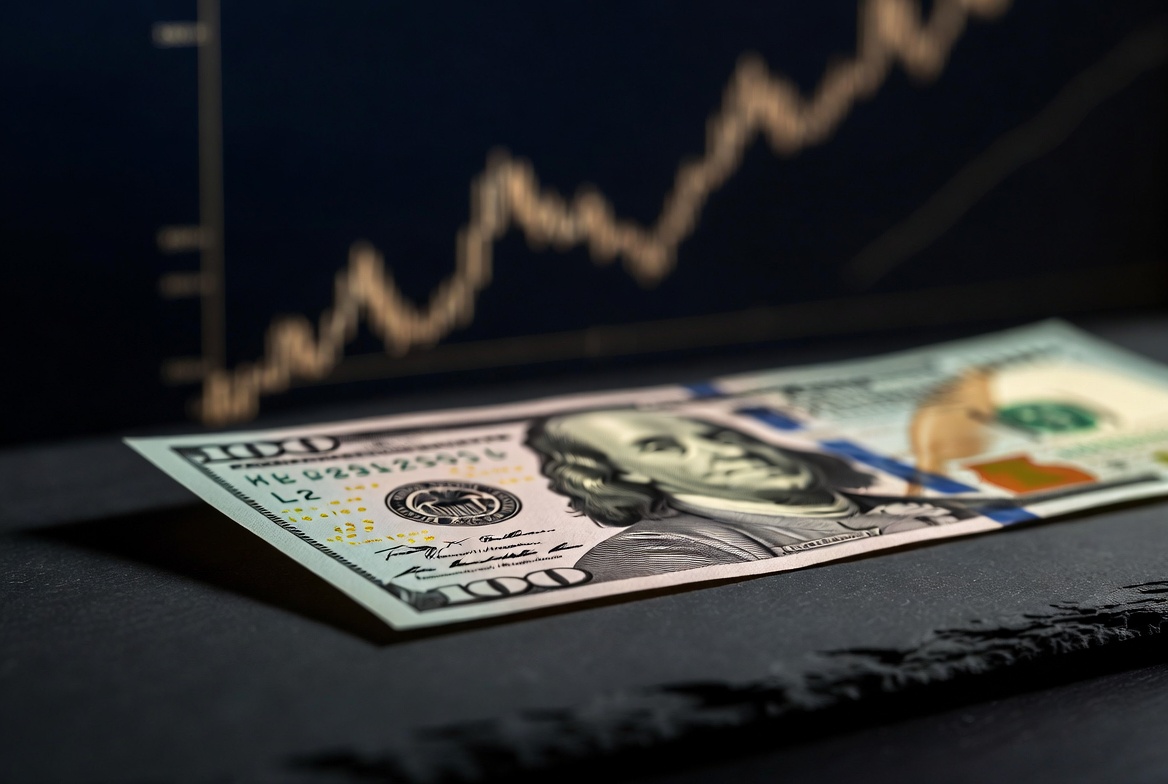 FOMC catalyst — full macro trader analysis" width="1168" height="784" srcset="https://kenmacro.com/wp-content/uploads/2026/04/DOLLAR-MAY-2026-KEN-CHIGBO-KENMACRO.jpg 1168w, https://kenmacro.com/wp-content/uploads/2026/04/DOLLAR-MAY-2026-KEN-CHIGBO-KENMACRO-300x201.jpg 300w, https://kenmacro.com/wp-content/uploads/2026/04/DOLLAR-MAY-2026-KEN-CHIGBO-KENMACRO-1024x687.jpg 1024w, https://kenmacro.com/wp-content/uploads/2026/04/DOLLAR-MAY-2026-KEN-CHIGBO-KENMACRO-768x516.jpg 768w" sizes="(max-width: 1168px) 100vw, 1168px" />
In one sentence
After a year-long monthly range, the dollar has rebounded off the lower end and the next leg probably goes higher — driven by safe-haven flows, oil-led inflation, sticky yields, and a Fed that cannot cut into this backdrop.
Quick Answer
Why Is the Dollar Rising Right Now?
The US dollar is rising because five macro forces are aligning simultaneously:
| 1. Safe-haven demand from unresolved geopolitical tension (Iran, Hormuz). |
| 2. Higher oil prices lifting US inflation risk and keeping pressure on the Fed. |
| 3. Elevated Treasury yields attracting capital into dollar assets. |
| 4. Reduced Fed cut expectations as markets reprice the rate path further out. |
| 5. Light speculative positioning creating room for further upside squeeze. |
Jump to section
Why the Dollar Matters Right Now
If you trade anything denominated against the dollar — forex majors, gold, commodities, US equities, emerging-market FX — the US dollar outlook is the most important macro variable on your screen this month. Not the S&P. Not Bitcoin. The dollar.
Here’s why. We’re entering a window where four distinct macro forces are simultaneously supporting the dollar, and they’re all showing up at the same time, right before a major FOMC meeting. That kind of alignment is rare. When it happens, the dollar can run further and faster than most retail traders are positioned for.
The traders who got flat-footed on the late-2024 dollar rally remember how expensive it is to miss these transitions. The ones who caught it knew what to look for. This piece is about what to look for now — and what breaks the thesis if it fails.
Why the Dollar Has Rebounded
Since April 2025, DXY has been chopping in a broad monthly range. The lower end was tested earlier this year, and for a while, consensus had the dollar trending lower into a Fed cutting cycle. That view has quietly collapsed.
In February and March 2026, the dollar bottomed, built a base, and started grinding higher. At the time of writing, DXY has recovered into the upper end of its recent range, within striking distance of the top of the multi-month structure.
The rebound isn’t random. It’s a textbook macro pattern: a range low that gets defended by a shift in the underlying driver. What changed is that every force that was supposed to weigh on the dollar has flipped.
Rate cut expectations collapsed. Markets had been pricing aggressive Fed easing for 2026. That pricing has been dismantled. Rates markets have repriced toward fewer cuts across the year, with the implied path flattening notably as inflation risks have resurfaced. The CME FedWatch tool tracks the live probability of each rate outcome meeting-by-meeting.
Geopolitical risk rebuilt the safe-haven bid. The Iran standoff is not resolved. Hormuz remains reportedly disrupted. Every day that goes by without a formal de-escalation keeps the dollar’s safe-haven premium in place.
Oil is elevated and sticky. Brent has recently traded well above the mid-$90s, with periodic spikes toward and above $100. That feeds directly into US inflation — which blocks the Fed and keeps yields elevated. Our full guide on how inflation affects forex, gold and stocks walks through this transmission channel in depth.
Yields are supportive. The 10-year Treasury yield remains elevated, with the 2-year firm. The US-Germany yield spread remains wide. That yield advantage is where capital is flowing. Live Treasury yield data is published daily by the US Treasury’s daily yield curve.
Four tailwinds. Same direction. That’s the setup.
Dollar Bullish vs Bearish Dashboard
The cleanest way to see where the balance sits. Six macro drivers, their current read, and the net impact on USD.
May 2026 dollar drivers
| Driver | Current read | USD impact |
| Geopolitics | Risk elevated, Iran unresolved | Bullish |
| Oil prices | Elevated, inflation-supportive | Bullish |
| Treasury yields | Elevated, US yield advantage wide | Bullish |
| Fed cut expectations | Repriced to fewer cuts | Bullish |
| US growth | Stable, no immediate shock | Neutral |
| Speculative positioning | Light, room for squeeze higher | Bullish |
Five bullish drivers, one neutral, zero bearish. This is the kind of alignment that produces directional moves.
Safe Haven Flows and Geopolitics
The dollar wears two different hats in a geopolitical crisis, and traders mix them up constantly. One is the reserve-currency hat: global capital flees to dollars for liquidity and safety, regardless of what’s happening in the US itself. The other is the yield hat: the dollar strengthens because the Fed stays tight when others can’t.
In the current environment, both are active at once.
The Iran ceasefire may technically be extended, but as covered in our full analysis of what the extension actually changed, the structural risk has not been removed. The US naval presence in Hormuz remains reported. Iran has made no formal concessions. Reported tanker flow disruptions continue. This is not peace — it is a paused confrontation.
For the dollar, paused confrontation is bullish. Markets remain hedged. Defensive positioning stays on. And every week the situation persists without resolution, the dollar’s safe-haven premium becomes more structurally embedded.
The important question for May: does the safe-haven premium fade if no further escalation occurs, or does it deepen if something breaks? Both paths exist, but the asymmetry matters. A calm week reduces the bid modestly. A flare-up in Hormuz or a collapse in talks sends DXY sharply higher within hours. How geopolitics moves forex markets breaks down this exact transmission channel. For the framework behind how flight-to-safety flows reposition capital across asset classes, see our risk-on vs risk-off guide.
How Oil Prices Affect the Dollar
Retail traders often assume oil and the dollar are directly correlated. The relationship is more layered than that.
When oil rises because of a supply shock — Hormuz constraints, OPEC cuts, geopolitical risk — it creates inflation pressure in the US economy. That inflation pressure has two effects. First, it delays Fed rate cuts. Second, it keeps nominal yields elevated because the market builds in a higher inflation premium.
Both effects are dollar-positive.
The mechanism works like this:
The oil → inflation → dollar transmission
| Stage | Market effect |
| Oil supply disruption | Hormuz constraints keep Brent elevated |
| Inflation impulse | Sticky headline CPI per BLS data, elevated breakevens, inflation expectations rising |
| Fed response | Rate cuts delayed, hawkish hold, dot plot pushed out |
| Dollar outcome | Yield advantage preserved, capital flows into USD assets, DXY supported |
The exception to the bullish setup is if oil rises so aggressively that it triggers a growth scare. In that case, the market starts pricing recessionary cuts, real yields fall, and the dollar can actually weaken despite the inflation impulse. That’s not the current regime — but it’s the tail risk worth watching if Brent breaks meaningfully above $110 and stays there.
For now, the oil backdrop is in the sweet spot for dollar strength: high enough to sustain inflation, not high enough to trigger growth collapse.
“The dollar doesn’t need perfect US growth. It just needs to look stronger than the alternatives.”
— KenMacro
Why Rising Yields Matter for USD
The cleanest driver of the dollar in any short-to-medium-term window is the yield differential. Money follows yield. Always.
With the US 10-year yield holding at elevated levels and the 2-year firm, the US-Germany yield spread has remained wide. The ECB has held its deposit rate steady through recent meetings. The Bank of England is facing its own cutting debate. The Bank of Japan remains structurally behind. In every major cross, the US yield advantage is intact or widening.
This is the transmission channel that matters most for EUR/USD, GBP/USD, and USD/JPY — the three pairs that dominate DXY. When US yields outpace G10 counterparts, capital flows into dollar assets. That flow is the bid. This is the exact mechanism covered in depth in how interest rates move forex markets.
The subtle point retail traders miss: the dollar doesn’t need yields to keep rising. It just needs them to stay elevated relative to alternatives. As long as the US curve holds above comparable developed-market curves, the structural bid stays in place.
For May, the signal to watch is the 2-year yield. If it holds firm, the dollar has cover. If it breaks meaningfully lower on a dovish Fed surprise, the yield cushion starts to thin.
If this framework is reshaping how you think about the dollar, the full KenMacro system extends the same logic across every asset on your screen — gold, oil, equities, bonds, every major currency pair.
Get the Free Framework →
|
Explore the Macro Trading Blueprint →
What the FOMC Could Change
The late-April/early-May FOMC meeting is the single biggest catalyst on the calendar for the dollar outlook May 2026. Markets are pricing a hold. The interesting variable is not the decision itself — it’s the language and the dot plot. For a deeper look at how central bank communication drives FX, see how central banks move markets. The full schedule and statement text is published by the Federal Reserve FOMC calendar.
Three paths are live heading into the meeting.
Hawkish hold (dollar positive). The Fed holds rates and signals that inflation risks remain elevated due to oil and geopolitical factors. Cut expectations push further out. Real yields edge higher. DXY breaks the upper end of the range. Gold comes under pressure.
Cautious hold (mixed for dollar). The Fed holds but keeps optionality open, acknowledging both upside inflation risk and downside growth risk. Rate path remains uncertain. DXY consolidates but maintains its current bid. No clean breakout.
Dovish hold (dollar negative). The Fed holds but emphasises weakening growth, softer labour data, or signs inflation is rolling over faster than expected. Cuts get pulled forward. Real yields fall. DXY fades back into the middle of the range. Gold rallies.
The probability-weighted outcome, given the current inflation and oil backdrop, leans toward the hawkish-hold or cautious-hold scenarios. A genuine dovish pivot would require something to break — weaker payrolls, softer CPI, or a sudden oil collapse. None of which is the current signal.
Technical Outlook for DXY
Here’s the simplest way to frame the technical setup.
DXY has been rangebound since April 2025 — roughly 95 on the downside, and somewhere in the 101–103 zone on the upside depending on how you measure. For a full year, the index has failed to break either boundary decisively. That kind of tight, extended consolidation usually ends with a directional break — not further chop.
After hitting the lower end of the range earlier this year, DXY rebounded and has recovered into the upper end of the range structure. That rebound gives the market room to push toward the upper end of the range — and in a breakout scenario, further still.
Key levels to watch in May:
| 100.00 (psychological) | First obstacle. A clean break and hold above opens the upper range. |
| 101.50 – 102.00 (range top) | Primary resistance zone. A break here confirms the bullish thesis. |
| 97.50 – 98.00 (structure) | First support. A break below weakens the bullish short-term case. |
| 95.00 (range low) | Thesis invalidation. A weekly close below flips the structure bearish. |
CFTC positioning data is also worth noting. Speculative positioning in the dollar has recently sat near the lower end of its 52-week range — meaning most of the market is under-exposed. Light positioning is fuel for a squeeze higher if catalysts align. A hawkish FOMC plus another Iran flare-up is exactly the kind of combination that produces sharp, violent dollar moves when positioning is this one-sided. The weekly CFTC Commitments of Traders report publishes the raw positioning data. The full DXY guide walks through how to read these signals in context.
What Could Invalidate the Bullish Case
Every thesis needs a kill-switch. If you cannot articulate what breaks your view, you are not trading a view — you are hoping.
Four things would force a reassessment of the bullish dollar case.
1. A clean Iran deal. An unexpected formal de-escalation — not another extension, but an actual resolution with tanker flows normalising through Hormuz — would remove the safe-haven bid and could send oil sharply lower. That combination unwinds two of the four dollar supports simultaneously.
2. A dovish Fed pivot. If Powell or senior FOMC members explicitly signal growth concerns outweigh inflation concerns, rate cut expectations rebuild rapidly. Real yields fall. The yield advantage thins. The dollar gives back ground across the majors.
3. A soft US data surprise. A meaningfully weaker NFP, softer CPI, or deteriorating ISM data would shift the Fed path. Any single one of these could trigger a short-term dollar unwind. All three in the same month would be a regime change.
4. A DXY weekly close below 95. The technical structure holds as long as the range low holds. A decisive break below 95 on a weekly basis signals that the monthly range is breaking down, not breaking up — and the bullish case is no longer intact.
None of these are base case. But any one of them, if it triggers, would be a pivot point worth respecting.
Dollar vs Gold Outlook
Gold and the dollar have an inverse relationship most of the time, but as detailed in our full macro guide to trading gold, the relationship breaks down in specific scenarios. The current setup is one of them — and traders who automatically pair “dollar up, gold down” are underestimating the gold side.
Here’s the nuance.
The dollar is being bid for two reasons simultaneously: yield advantage and safe-haven flight. The first is unambiguously bearish for gold — rising real yields compress gold’s appeal. The second is actually bullish for gold — same flows, different channel. When both forces run at once, gold and the dollar can both rally, at least for a while.
Which force dominates depends on real yields. If the 10-year TIPS yield — published daily via the Federal Reserve’s FRED database — keeps rising, gold stays pressured regardless of the safe-haven flow. If real yields stabilise or fall because growth concerns emerge, gold benefits.
For May, the most likely scenario is a strong dollar with gold in a tight range — grinding sideways with upside spikes on geopolitical flare-ups and downside pressure on hawkish Fed or yield breakouts. That is a regime where gold is hard to trade, and most retail losses on the asset happen in exactly this kind of chop.
The bigger upside scenario for gold: an eventual Fed pivot later in 2026. If the market starts to believe cuts are coming, real yields fall, the dollar softens, and gold can run. That is not the May setup — but it is the setup worth preparing for.
May 2026 Outlook Summary
The framework for the month ahead.
The May 2026 dollar thesis in six points
| ☐ Structural range since April 2025 has rebounded off lows — bullish base building. |
| ☐ Safe-haven bid remains intact while Iran tensions unresolved. |
| ☐ Oil-driven inflation impulse delays Fed cuts and supports yields. |
| ☐ US yield advantage over G10 peers remains wide. |
| ☐ FOMC likely to lean hawkish-hold; rate path pushed out. |
| ☐ Light speculative positioning creates fuel for an upside squeeze. |
Direction of travel leans higher. Key level to watch on the upside: a clean break above 100 opens the 101.50–102.00 zone. Key level to watch on the downside: a weekly close below 95 invalidates the bullish structure.
This is a regime where the dollar has four macro tailwinds, light positioning, and a clear event catalyst. Setups like this don’t come around often. The traders who identify them early — and respect the kill-switches if they trigger — are the ones who compound through the cycles.
In short
The May 2026 dollar outlook remains constructive while US Treasury yields stay elevated, geopolitical risk persists, and the Fed resists cuts. A clean break above DXY 100 opens the 101.50–102.00 zone. A weekly close below 95 invalidates the bullish structure.
“Most traders don’t have a strategy problem. They have a context problem. The dollar is the context. Get this one right and every trade on your screen looks different.”
— KenMacro
Most traders react to the dollar after it moves. Learn to read the forces before it happens.
The KenMacro Framework gives you the full cross-asset transmission system — yield differentials, capital flows, central bank policy, and risk sentiment, connected to every market on your screen.
Continue reading — the KenMacro macro library
About the author
Ken Chigbo
Founder, KenMacro
Macro trader and educator with 18+ years of markets experience. Started on a London trading floor as a tea boy before moving into institutional FX analyst roles, then full-time trading and education. KenMacro helps serious traders understand what actually moves markets — before the headlines hit. Covering inflation, interest rates, geopolitics, central bank policy, and the forces that drive capital flows globally. Trusted by 3,000+ traders worldwide. kenmacro.com
Frequently Asked Questions: Dollar Outlook May 2026
Why is the dollar rising?
The dollar is being supported by four simultaneous macro forces: safe-haven demand from unresolved Iran tensions, oil-driven inflation pressure that delays Fed cuts, elevated US Treasury yields that maintain the US yield advantage over G10 peers, and light speculative positioning that amplifies any directional move. The combination has rebounded DXY off its multi-month range lows.
What is the DXY forecast for May 2026?
DXY has recovered into the upper end of its recent range after rebounding from Q1 lows. The directional bias for May leans higher, with the immediate obstacle at the psychological 100 level and primary resistance in the 101.50–102.00 zone. A clean break above 100 opens the upper range. A weekly close below 95 would invalidate the bullish structure. The FOMC meeting is the single biggest catalyst, with a hawkish-hold scenario being the most likely path based on the current inflation and oil backdrop.
How do oil prices affect the dollar?
Elevated oil prices caused by supply disruption — such as the current Hormuz constraints — feed into US inflation. Sticky inflation delays Fed rate cuts and keeps nominal yields elevated, which supports the dollar via the yield advantage channel. The exception is if oil rises so aggressively that it triggers a growth scare, at which point the market prices in recessionary cuts and the dollar can weaken despite the inflation impulse.
How will the FOMC affect the dollar in May 2026?
The FOMC is expected to hold rates. The key variable is the language and forward guidance. A hawkish hold — emphasising persistent inflation risks from oil and delaying the expected rate cut path — would be dollar positive and likely break DXY above the range top. A cautious or dovish hold would keep DXY rangebound. A genuine dovish pivot, not base case but possible, would see DXY give back recent gains.
What could cause the dollar to fall in May 2026?
Four invalidation triggers: a formal Iran deal that removes the safe-haven bid and sends oil lower; an explicit dovish Fed pivot emphasising growth concerns; a soft US data surprise (weaker NFP, softer CPI, deteriorating ISM); or a DXY weekly close below 95 that breaks the multi-month range structure. None are base case, but any one of them would be a pivot point worth respecting.
Will gold fall if the dollar keeps rising?
Not necessarily. In the current regime, the dollar is being bid for both yield and safe-haven reasons. The yield channel pressures gold via rising real yields. The safe-haven channel can actually support gold via the same global risk flows. The net effect for May is most likely gold in a tight range with spikes on geopolitical flare-ups and pullbacks on hawkish Fed surprises. A sustained gold rally requires a Fed pivot that brings real yields lower — not the current setup.
What moves the dollar most in the short term?
In any short-to-medium-term window, yield differentials are the cleanest driver. Capital follows yield. When US yields hold or widen their advantage over G10 peers, the dollar is structurally supported. The 2-year Treasury yield is the sharpest real-time proxy for Fed expectations, and therefore one of the most reliable leading indicators for dollar direction.
Sources: market reporting from Reuters, CNBC, Bloomberg, Trading Economics, CME FedWatch, CFTC Commitment of Traders data, and institutional research from major banks. This is macro education and market commentary, not financial advice or trade recommendations. Always apply your own risk management. This article is updated live as developments emerge.
Brokers (audited by KenMacro)
Blueberry Markets FREE Macro Desk bundled
Star Trader $50 + 1:1000 leverage
E8 Markets Code KENMACRO for 5% off
KenMacro earns a commission on broker sign-ups via these links at no extra cost. Capital at risk on all trading.
The MACRO MASTERY desk
The full institutional macro desk, delivered through Discord.
- Live trade ideas with full ladders
- Macro-Flow scanner on Tier A assets
- Weekly scorecard + Sunday Brief PDF
- Daily pulses (London / NY / Asia)