
Stop reacting to market moves. Start understanding what drives them.
Build your macro trading framework for 2027.
Combine economic fundamentals and technical analysis through the Macro Trading Blueprint, six weekly live group sessions, practical assignments and direct Q&A with Ken Chigbo. Understand central banks, inflation, interest-rate expectations and relative currency strength, then bring it into your own market preparation.
- 60 recorded Blueprint lessons
- Six weekly live group classes
- Practical assignments between sessions
- Session recordings and resources
- Live group Q&A with Ken
- Preparation for the 2027 markets
The live Bootcamp is capped at 20 places. Enrolment closes Saturday 31 October. Live sessions start the week of 2 November.
£397.95 total at checkout. Six live sessions, Thursdays 19:00 UK, from 5 November. How enrolment works
New to fundamentals? You don’t need an economics background. We start with the basics of inflation, interest rates and central banks, then work through real market examples together.
Already trade the charts? If you’re an experienced technical trader, the Bootcamp adds the economic research behind the moves and shows how to bring it into your own analysis.
All we ask is that you’re prepared to study, join in and put the work in. This is education, not signals, and trading always carries risk.
- The full Macro Trading Blueprint, 60 recorded lessons
- Six live group classes with Ken, Thursdays 19:00 UK
- A practical assignment every week
- Live Q&A and recordings of every session
- A repeatable research process for FX, gold, indices and commodities
- 12 months of the KenMacro Desk terminal
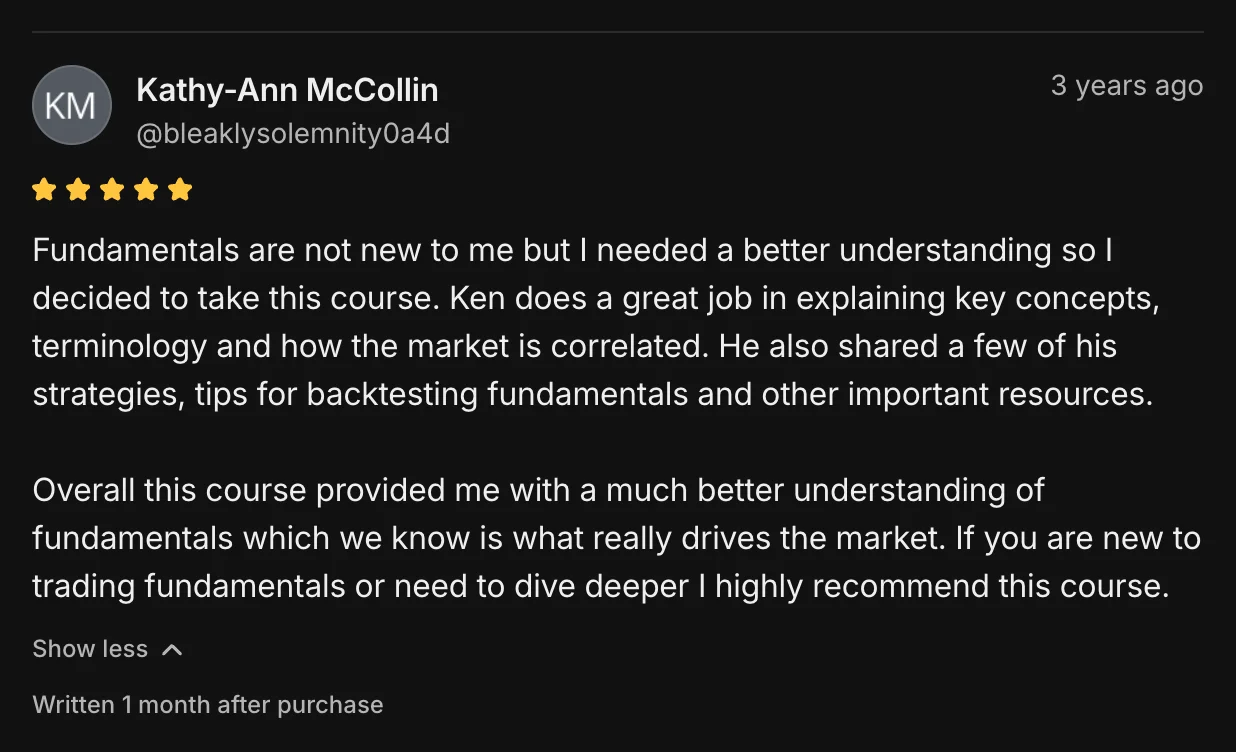
“Overall this course provided me with a much better understanding of fundamentals which we know is what really drives the market.”
Kathy-Ann McCollin, Whop review of the recorded course. Rated 4.8 from 13 reviews. Read the reviews
Total at checkout, one-time. Capped at 20 places. Enrolment closes Saturday 31 October, 23:59 UK. Live sessions start the week of 2 November. Full details
Join the BootcampWe identified the AUD opportunity. Now learn the process behind the research.
Before 2026 began, Ken was analysing the economic forces that could support the Australian dollar. The important lesson isn’t simply that AUD subsequently appreciated. It’s the research process behind the view: comparing economies, interpreting central-bank policy, identifying changes in expectations and using technical analysis to examine opportunities. In the Bootcamp, we work through that process and apply it to currencies, gold, indices and commodities as we prepare for 2027.
“AUD has gained over 200 pips. AUD has been the better performer versus the dollar’s peers… The reason for that: previously pricing in rate cuts for September, now markets are pricing them out. You see how things are priced in ahead of the event.”
Transcribed from the original clip. On screen, Ken walks through the RBA’s 12 August decision, the 27 August inflation release and the AUD/USD chart from 27 August to mid-September.
The dated trail: Ken on AUD, September to December 2025
- 16 Sep 2025“AUD has been the better performer versus the dollar’s peers.”YouTube short, above
- 15 Oct 2025“We have two central banks that are diverging… NZD is going to be more crippled than Australia.”YouTube live stream, on AUD/NZD
- 6 Nov 2025“The big money is more likely to go in Australia than it is to New Zealand. More stable economy, higher… yields.”Ken’s video clip
- 4 Dec 2025“The RBA might not cut rates, well they might hike rates… the opportunities for outperformance in Aussie dollar are incredible right now.”Ken’s video clip
- 15 Dec 2025“Aussie dollar has been a solid outperformer… I’m personally looking at buying the dips.”Ken’s video clip
Transcribed from the original recordings, lightly trimmed. These show the macro view Ken was teaching; they are not records of trades. In the same period Ken also noted strong Swiss franc flows, so the page does not claim a specific AUD/CHF call.
How the reasoning worked, step by step
- 12 August 2025The RBA cuts by 25 basis points and signals it is prepared to keep cutting. Markets price in more cuts and AUD drifts lower.
- 27 August 2025Australian monthly inflation jumps to 2.8% against a 2.3% forecast and 1.9% previously.
- The repricingMarkets stop pricing a September cut. The expected path for Australian rates moves up relative to other economies.
- The currencyAUD gains more than 200 pips against the dollar and outperforms the dollar’s other major counterparts over the same window.
The principle Ken was teaching: currencies respond to changes in rate expectations, and those changes are priced before the central bank acts. Later events, such as the RBA’s 2026 hikes, came after this analysis and are shown separately below.

Over 2026 the RBA raised its cash rate four times, to 4.60%, while several other central banks held or eased. Source for the chart: ECB euro foreign exchange reference rates, AUD crosses, 31 December 2025 to 14 October 2026, end-of-period rate divided by start-of-period rate. Spot price change, not trading profits or returns earned by anyone.
Finding the next important market move starts long before the entry. You need to understand the economic backdrop, recognise where expectations may diverge, build a thesis and know what would prove it wrong.
AUD is the example. The research process is what you learn, and it applies to any market you trade. A good process does not make every forecast right; it tells you what you expect, why, and what would prove you wrong.
AUD was one market thesis. In this Bootcamp, you’ll learn how to research what could matter in 2027.
We’ll apply the same macroeconomic research process across currencies, gold, equity indices, commodities and interest rates. You’ll learn to compare economic conditions, identify potential divergences, build scenarios and connect them to technical analysis.
- A personal macro research framework
- A 2027 multi-asset watchlist
- Conditional economic scenarios
- A research checklist
- A clear way to monitor what could change the outlook
Not a list of trades to copy. A framework for building your own market view. These are the areas we analyse within the six-week syllabus; not every market gets equal class time.
What could drive the markets in 2027?
Where could monetary policy diverge? Which economies might surprise on growth or inflation? Where might currency strength or weakness become interesting? What could happen to gold if real yields, inflation expectations or the dollar change? And which indices or commodities might behave differently across possible scenarios?
Rather than giving you predictions to memorise, we work through how to research those questions yourself: the economic backdrop, the potential catalysts, conditional scenarios, and then how technical analysis fits in.
Don’t enter 2027 with a list of guesses. Build a process for evaluating the possibilities.
One framework. Multiple markets. 8 steps
- Economic backdropGrowth, inflation, employment, policy stance.
- Market expectationsWhat is already priced in rates and assets.
- Relative divergenceWhere two economies or policies pull apart.
- Potential catalystsThe data and meetings that could force a repricing.
- Asset selectionWhich market expresses that divergence most cleanly.
- Technical confirmationWhere the chart confirms or contradicts the thesis.
- Risk and invalidationWhat would prove the view wrong, decided in advance.
- Monitor and reassessA weekly check of what has changed.
You aren’t paying to study the Australian dollar. You’re learning how to build your own market analysis.
Wherever you are in your trading development, go deeper.
One programme, taught as a group. The syllabus starts from the foundations, and the live discussion goes as deep as the questions in the room.
Make market news make sense.
You may know how to identify a technical setup but still struggle to understand why a currency or index is moving. We work through the economic foundations, the important indicators and how the pieces fit together, so news becomes something you can read rather than something that catches you out.
- Foundations explained clearly
- Reading economic data and market reactions
- Central-bank basics
- Guided weekly assignments
Sharpen the thesis behind the trade.
You may already follow the calendar and read market structure. The next step is more deliberate comparisons between economies, finding where expectations differ, and testing a thesis against incoming information. In the live sessions we examine current conditions and discuss what would change the outlook.
- Relative-value and divergence analysis
- Scenario development across assets
- Cross-asset relationships
- Invalidation and macro with technical execution
See how I actually teach.
This is a short excerpt from The Fed Balance Sheet, one of the lessons inside my recorded Macro Trading Blueprint. It’s the sort of economic research we’ll build on during the six-week live Bootcamp.
Unedited excerpt from the recorded lesson (25:39 to 26:38 of 32:26). Ken is explaining how quantitative easing has historically related to gold and the Nasdaq. It is an educational example, not a trade recommendation.
What people say after learning macro with Ken.
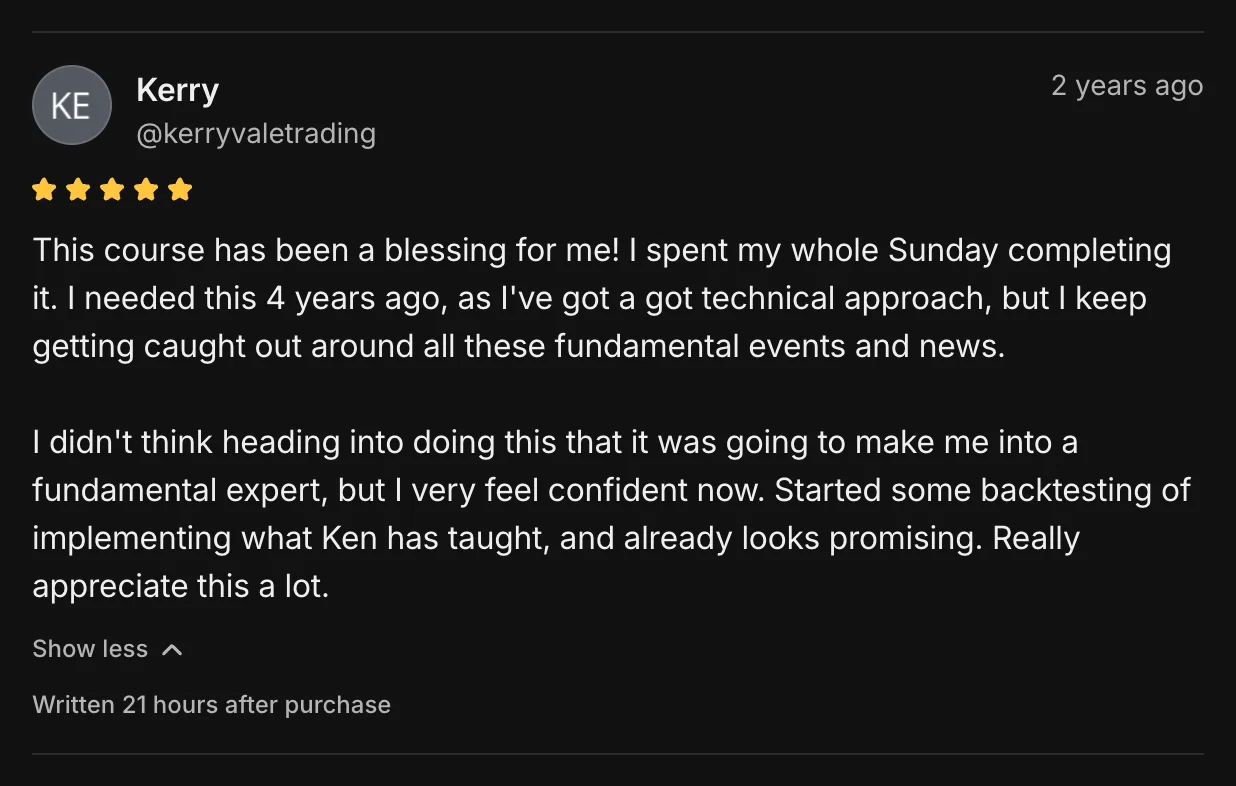
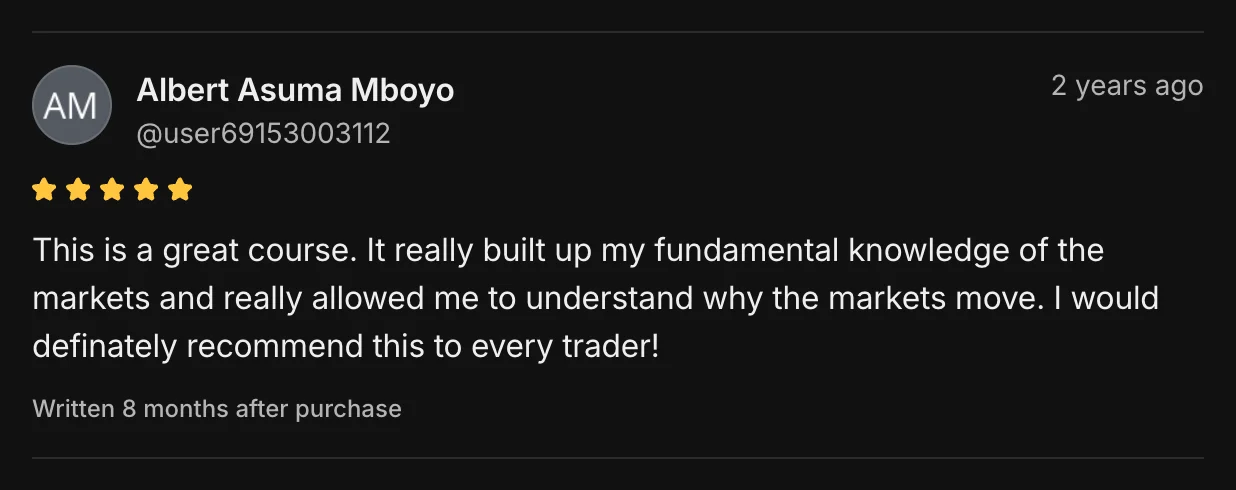
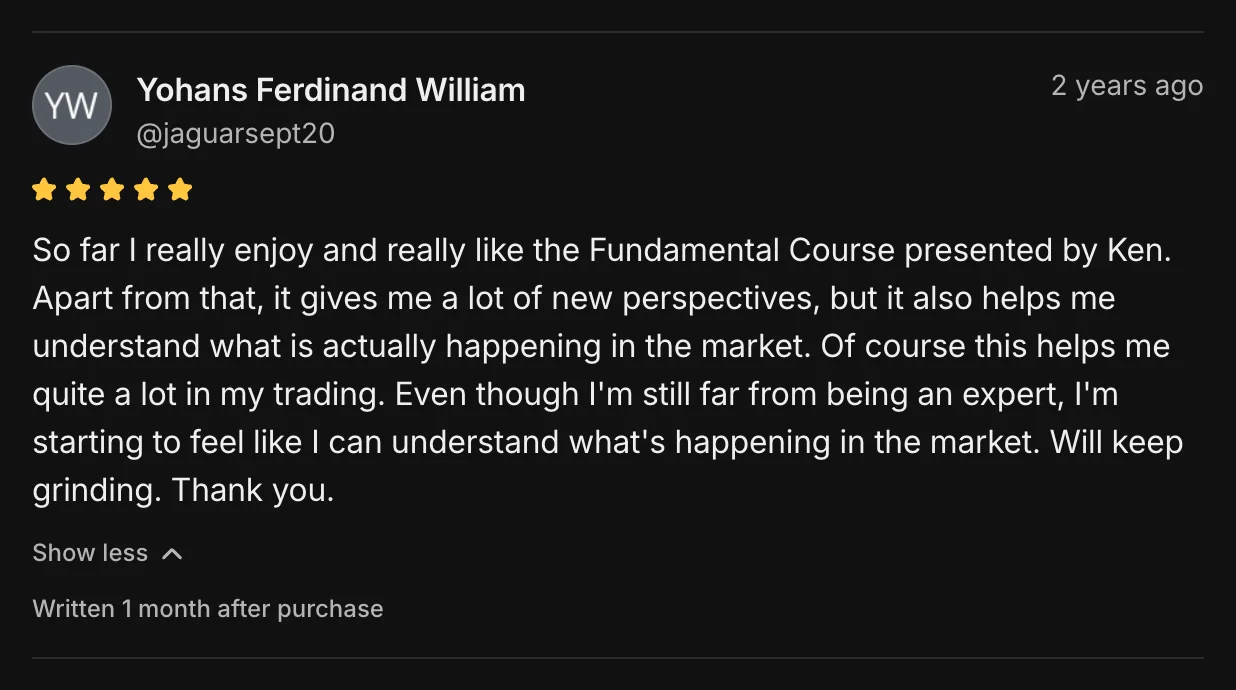
These are genuine reviews posted publicly on Whop by people who studied with Ken. They are unedited screenshots, typos included, and they are reviews of the recorded course now included with the Bootcamp as the Macro Trading Blueprint. Individual experiences vary. The November live Bootcamp is a new cohort, so it has no reviews of its own yet.
The recorded Macro Trading BlueprintReviews of Ken’s recorded fundamentals course, now the Macro Trading Blueprint included with the Bootcamp.
Jaša Tkavc, one of my one-to-one mentorship students (a separate programme, not the Bootcamp), shared with his permission. He passed the FTMO Challenge in February 2026 and verification in March, then received documented payouts from April across two prop firms.
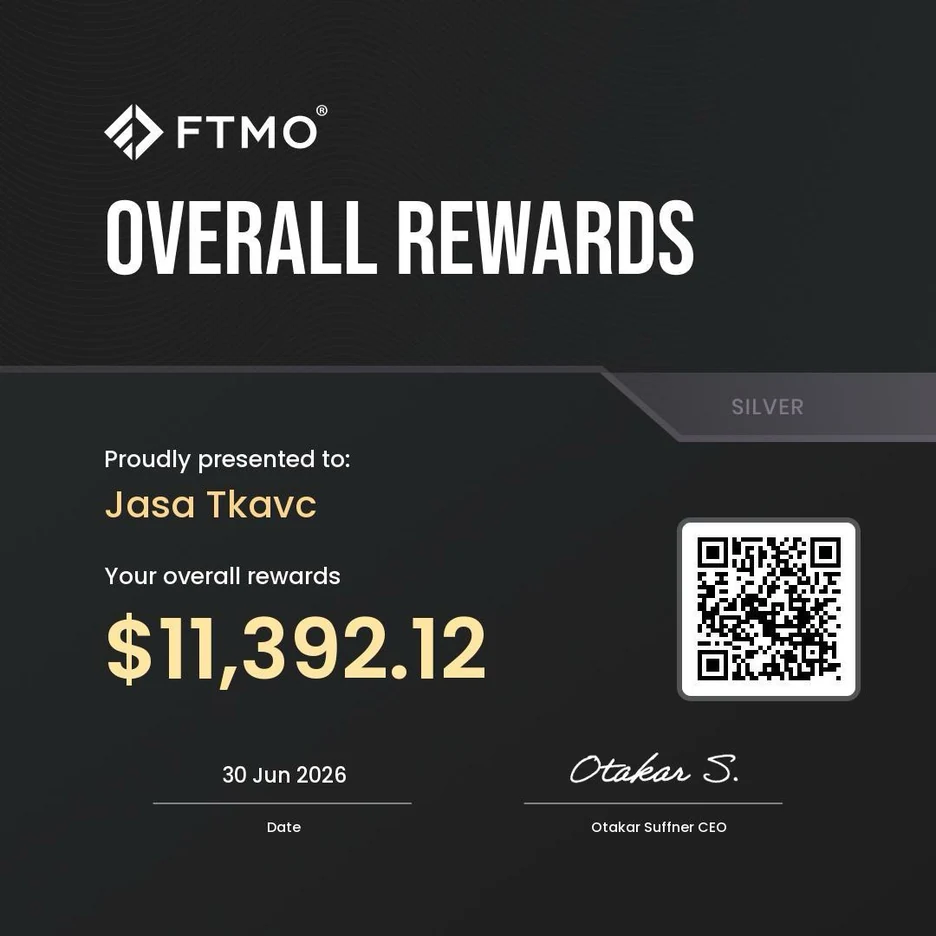
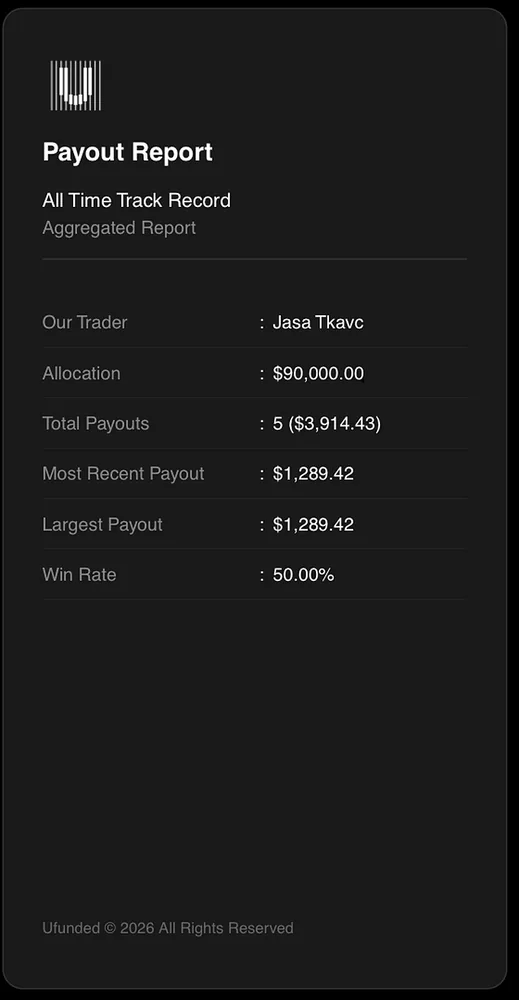
Important context: these are prop-firm payouts on funded (simulated) accounts, from one student over about six months of private mentorship. They are not typical, not a projection and not a result of the Bootcamp, which has not run yet. Most retail traders lose money.
The recorded course is rated 4.8 out of 5 from 13 reviews on Whop (January 2024 to June 2025). That figure covers this course only, not KenMacro’s other products. Reviews describe learning experiences, not trading results; individual experiences vary and trading involves risk.
Don’t just watch six classes. Build something throughout the six weeks.
Each week connects what you’ve studied to a practical research task. By the end, the aim is a more structured way to interpret economic developments and prepare your own market scenarios.
The Macro Trading Blueprint
What’s inside the course on Whop
- Module 1Key economic indicators and central banks
- Module 2Market sentiment
- Module 3Risk events and geopolitics
- Module 4Correlated markets
- Module 5Trading strategies
- Module 6Resources and macro analysis tools
- Macro AcceleratorCentral banks, bonds, sentiment, COT data, recessions
- Intermediate Macro MechanicsThe Fed balance sheet and reading central bank speeches
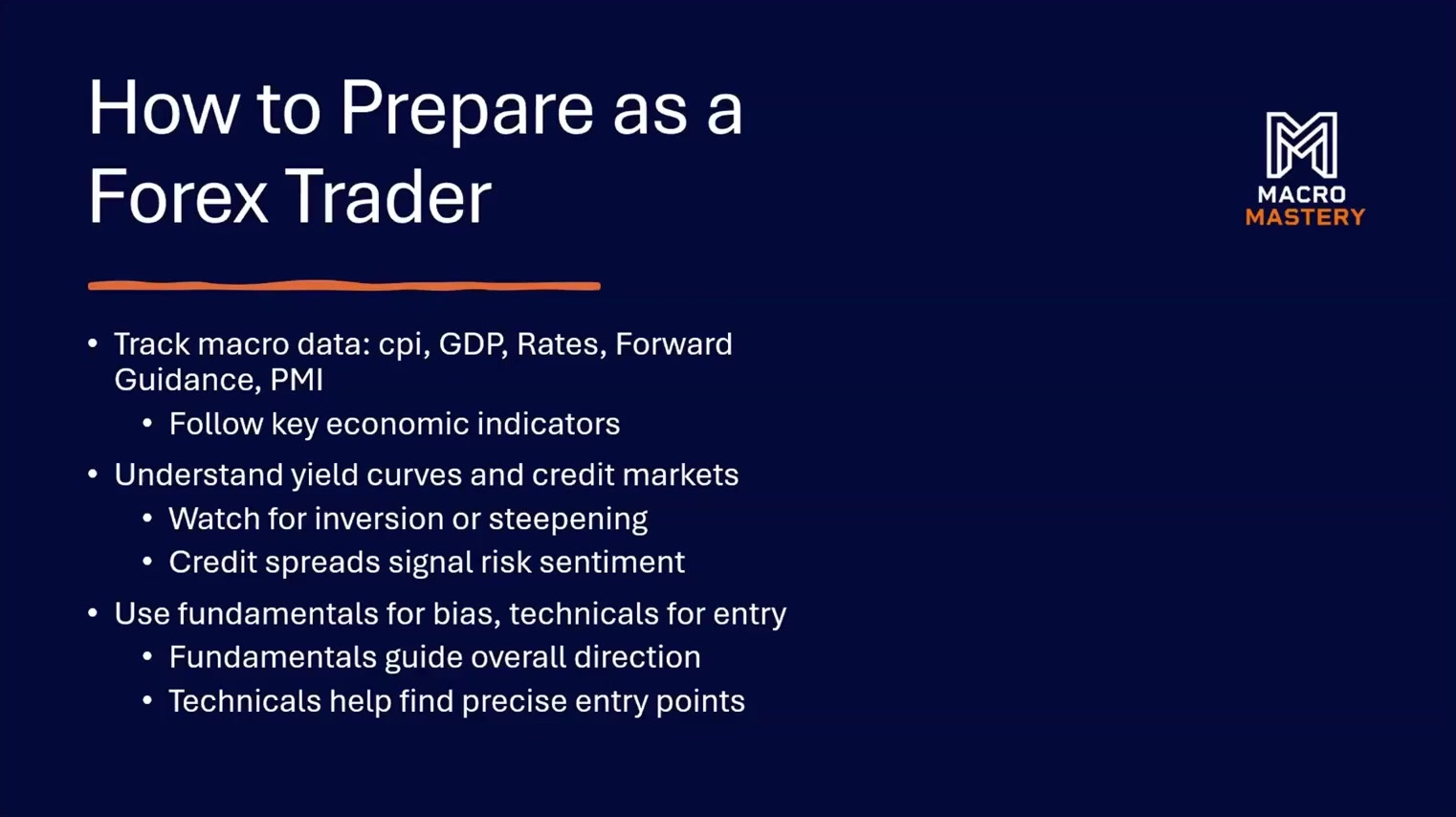
Six weekly live group classes
Ken works through the week’s economic developments live on Zoom, applies the framework to real markets and takes your questions. Every session is recorded, so if you miss one you can catch up. It is group teaching: questions are taken in the scheduled sessions, not one to one between them.
You’re not left to work it out on your own.
Alongside the six live classes, you’ll receive 12 months inside KenMacro Desk, where I follow the markets through the trading week. I record a market rundown on most trading days, explaining the economic developments I’m watching and the levels that matter to me, and I publish a Week Ahead and research reports every week.
The idea is that you keep practising what you’re learning with real markets in front of you, rather than finishing a lesson and being left to work everything out yourself.
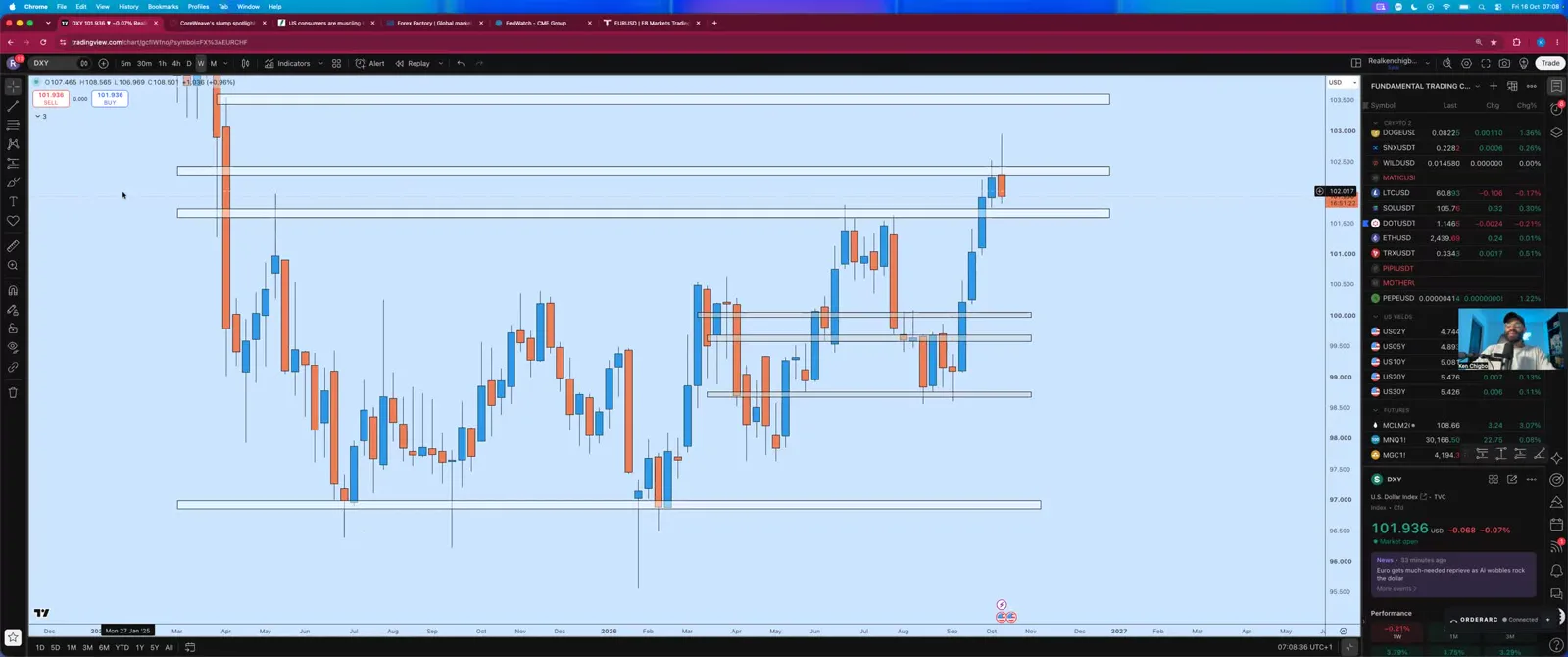
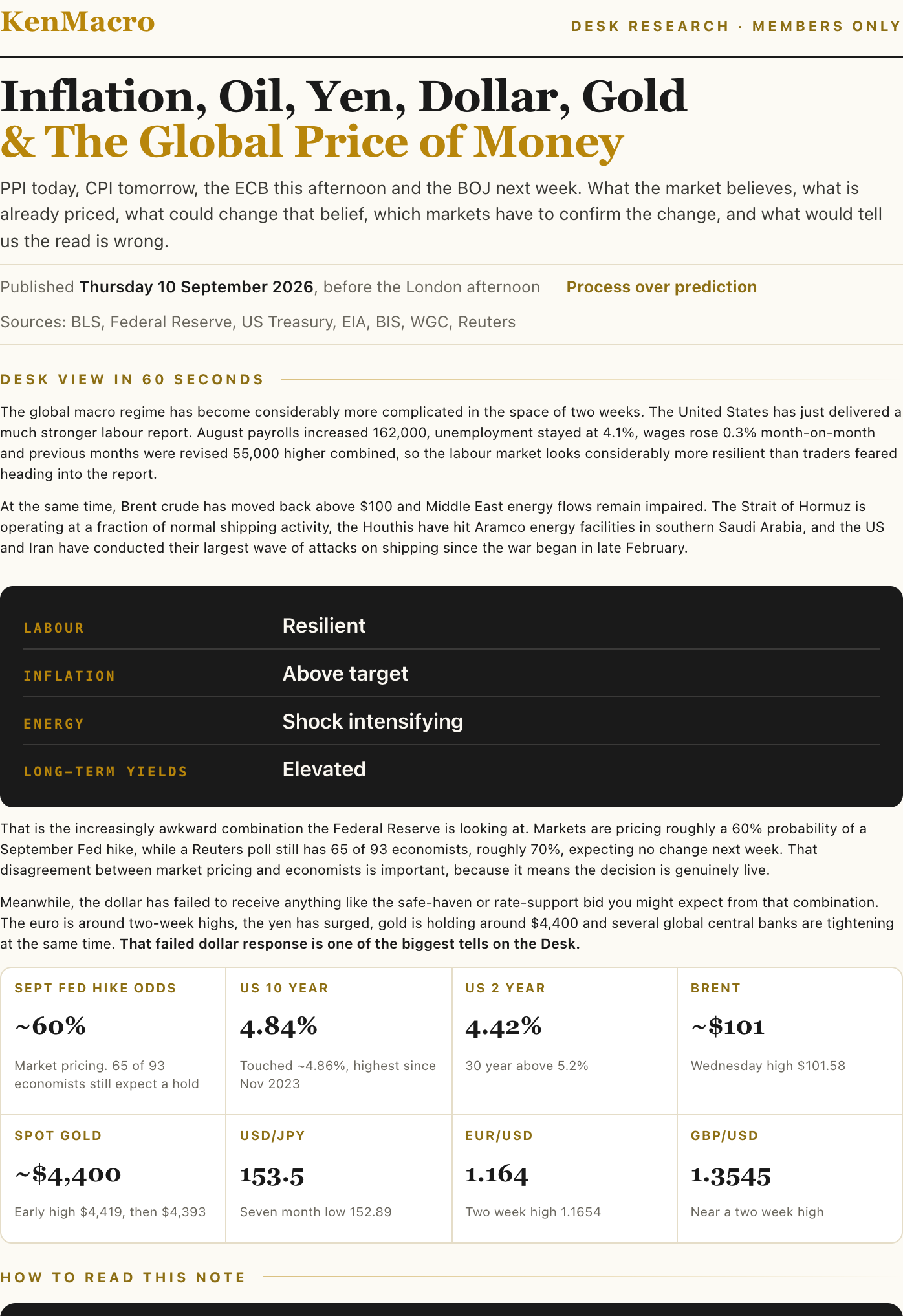
12 months of KenMacro Desk access included. Your personal activation link arrives by email within about 10 minutes of purchase, and the 12 months run from the day you activate. Desk content is market education and analysis, not personal financial advice.
Six weeks. One structured market framework.
Not six separate topics: one research process that gets more sophisticated each week. Each week builds on the last. You’ll study the economic context, apply what you’ve learned and develop practical research that feeds into your preparation for 2027.
- Week1
Understand the macro environment
Growth, inflation, central-bank policy, risk sentiment and market conditions: the foundation every later week builds on.
Your outputYour first macroeconomic dashboard. - Week2
Central banks and currency divergence
Compare central banks, economies and relative currency strength across the Fed, RBA, BoE, ECB, BoJ, SNB, RBNZ and BoC, using your Week 1 dashboard.
Your outputThree currency relationships with a documented relative-strength thesis. - Week3The repeatable research process
From the AUD opportunity to your own market forecasts
We’ll break down the research behind Ken’s Australian dollar analysis and extract the process used to identify potential opportunities before they develop. Then we’ll apply that same framework to other currency pairs, gold, indices and commodities, examining economic conditions, central-bank expectations, market pricing, potential catalysts and technical confirmation.
Your outputYour own macro research and forecasting framework, demonstrated through conditional scenarios across selected currencies and another asset class. - Week4
Gold, yields and the dollar
Apply the framework to gold: real yields, inflation expectations, interest rates, the dollar and risk conditions.
Your outputTwo conditional gold-market scenarios. - Week5
Macro meets technical analysis
Connect your macro view to market structure, technical confirmation, invalidation and risk management.
Your outputAn example trading plan showing both the macro and the technical reasoning. - Week6
Your 2027 multi-asset playbook
Bring every week together: prepare for several economic scenarios across the markets you trade, rather than depending on one forecast.
Your outputYour own 2027 multi-asset watchlist, scenario framework and research checklist.
Every week includes live questions and discussion. These are educational exercises, not trade signals or recommendations. Six weeks builds a research process; it does not promise profitable trading.
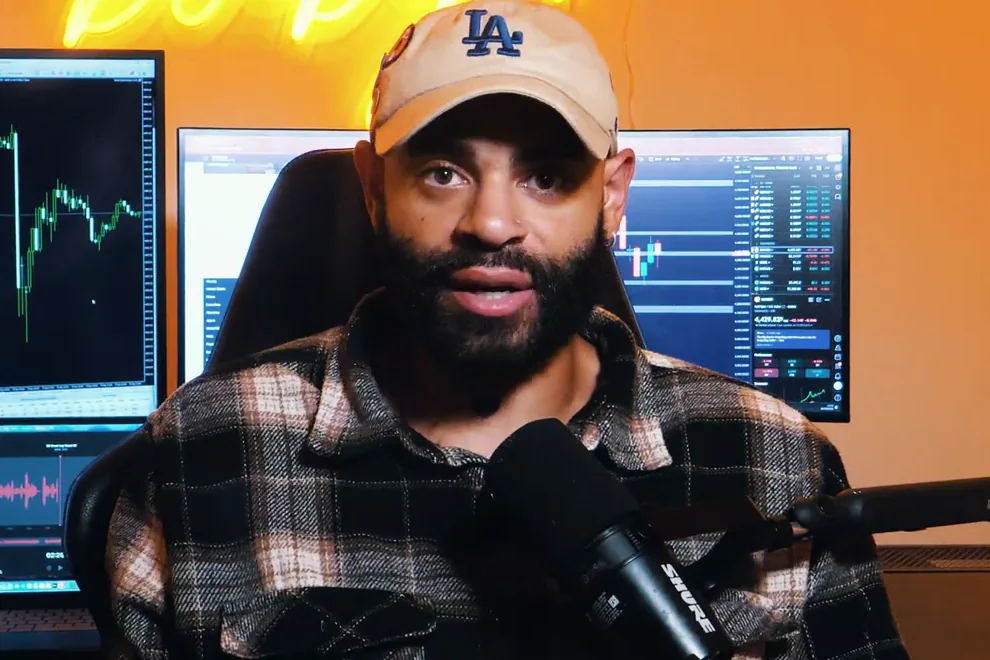
18 years in the markets. Six weeks working through the framework with you.
Ken Chigbo has spent 18 years working in and analysing financial markets, including a professional background in financial-news coverage. Today he writes the KenMacro desk notes and the weekly Week Ahead preview, and teaches macro live.
His approach combines macroeconomic developments, interest-rate expectations, currency relationships, market structure and risk management. The goal of the Bootcamp is not to memorise economic definitions. It’s to develop a structured way of interpreting the information that moves markets.
The Blueprint gives you the foundations. The Bootcamp helps you put them to work.
Study the lessons, work through the markets with Ken, bring your questions and practise building a research framework you can keep using beyond the six weeks.
Macro Trading Bootcamp, founding cohort
£379 course price plus Whop’s 5% service fee, one-time purchase. Whop shows the full total, including any tax that applies, before you pay.
What’s included
- The full recorded Macro Trading Blueprint, 60 lessons, lifetime access
- Six weekly live group sessions with Ken, Thursdays 19:00 UK, 5 November to 10 December, analysing current economic and market developments
- Recordings of every live session for the cohort
- A practical assignment every week
- Live group Q&A in every session
- A repeatable research process you can apply to FX, gold, indices and commodities
- Preparation for different possible 2027 market scenarios
- 12 months of the KenMacro Desk: my market rundowns on most trading days, plus a weekly Week Ahead and research reports
Join the Macro Trading Bootcamp
The cohort is capped at 20 places, to keep the Q&A personal.
At checkout: you will see Macro Trading Bootcamp, £397.95, one-time payment. Your Blueprint course access opens straight away.
Capped at 20 places. Enrolment closes Saturday 31 October.
- Enrol by Saturday 31 October, 23:59 UK time. You get the full Blueprint immediately, so you can start on the foundations.
- Live sessions start the week of 2 November: Thursdays at 19:00 UK time, 5 November to 10 December. Your Zoom link and calendar invites are emailed before the first session.
- Places are limited to keep the live Q&A personal, and enrolment closes early if the cohort fills.
What it does not include
- Private one-to-one mentorship (a separate programme)
- Trade signals or copy trading
- Access to future Bootcamp editions
- Any promise of trading results or a funded account
What happens after you enrol?
Get access
Straight after checkout, log in at whop.com with your purchase email: the full recorded Macro Trading Blueprint is open. Within about 10 minutes your welcome email arrives, with a personal link to activate 12 months of KenMacro Desk.
Join the live Bootcamp
Six Thursday classes on Zoom at 19:00 UK, 5 November to 10 December. Your Zoom link and calendar invites are emailed before the first class. Each week has an assignment, every class ends with questions, and sessions are recorded for the cohort.
Keep developing your analysis
Use the Blueprint and the Desk rundowns and research to follow real markets, study the economic releases and practise the framework, during the six weeks and for the rest of your Desk year.
Before you enrol.
What exactly is included?
The full recorded Macro Trading Blueprint (60 lessons, lifetime access), six weekly live group sessions with Ken on Zoom, recordings of those sessions, a practical assignment each week and live group Q&A. The Blueprint on its own is self-paced; the Bootcamp adds the live teaching, assignments and Q&A on top, working towards your own 2027 framework.
Is it right for my experience level?
If you are newer to macro, the syllabus starts from the foundations and the weekly tasks are guided. If you already follow the calendar and read market structure, the live sessions go further into relative-value analysis, scenarios and invalidation. You should be comfortable studying market concepts and practising between sessions.
What happens in the live sessions?
One session a week on Zoom, Thursdays at 19:00 UK time, from 5 November to 10 December, starting the week of 2 November. Each covers that week’s theme, applies it to current markets, sets the week’s assignment and ends with questions.
Can I ask Ken questions?
Yes, during the live sessions. It is group teaching, so questions are taken in the scheduled sessions rather than one to one between them.
What if I can’t attend live?
Every session is recorded and shared with the cohort, so you can catch up and bring questions to the next one.
Do I get assignments?
Yes, one per week: a macro dashboard, a central bank comparison with a relative-strength thesis, your own research and forecasting framework applied across markets (using AUD as the worked example), two conditional gold scenarios, a macro plus technical trading-plan example, and your 2027 watchlist and framework.
How are macro and technical analysis combined?
The macro work tells you what could move a market and why; the chart tells you whether price agrees and where the idea is wrong. Week 5 is dedicated to combining the two, and the theme runs through every session.
What access do I keep?
Lifetime access to the recorded Blueprint on Whop, including lessons added to those courses later, plus the recordings of the six sessions shared with the cohort, and 12 months of the KenMacro Desk terminal from the day you join. Future Bootcamp editions are not included.
I already own the Blueprint. Am I enrolled?
No. Owning the Blueprint and joining a live cohort are separate. Anyone who already bought the founding-cohort package keeps exactly what was included when they bought it.
What are the refund and cancellation terms?
UK consumer law gives you 14 days from purchase to cancel a digital purchase unless you have expressly agreed to immediate access and acknowledged that you lose that right. Whop’s checkout does not ask you to give up that right, so you can cancel within 14 days by emailing kenchigbotrading@gmail.com.
Is this financial advice?
No. The programme is financial-market education. All trading involves risk and individual results vary.
Risk. Trading currencies, gold and CFDs on margin carries a high level of risk, and most retail traders lose money. Leverage can work against you as well as for you. Only trade with money you can afford to lose.
The Macro Trading Bootcamp is general education about markets. It is not financial advice, not a recommendation to trade any instrument, and not tailored to your circumstances. KenMacro is not authorised by the Financial Conduct Authority. Past market behaviour, including the currency moves shown on this page, and any individual’s experience are not a guide to what you will achieve.
Don’t just watch the market move. Learn how to prepare for it.
Build your economic framework. Understand relative strength. Develop your market analysis. Prepare for 2027.
Join the Macro Trading Bootcamp
£397.95 total at checkout. Capped at 20 places. Enrolment closes Saturday 31 October, 23:59 UK time.